Google Search Console Updates in 2026
Google Search Console has had a genuinely busy few months. Google has rolled out two updates that, on paper, both promise the same thing: more visibility into where your content is being found and how it performs once it gets there. It’s no secret that the internet is much more interactive than it was even 2 years ago. Social media feeds organic content, which feeds AI which feeds brand visibility and so on and so forth. In practice, one of these new updates delivers real, actionable data. The other is a step in the right direction that, for now, tells you very little you can actually act on.
Here’s a breakdown of both, what they mean for site owners and marketers, and where your priorities should sit.
Platform properties: finally, search data for your social content
On 7 July 2026, Google introduced platform properties, a new property type in Search Console that lets you track how your Instagram, TikTok, X, and YouTube content performs specifically within Google Search and Discover.
This is separate from each platform’s own native analytics. A platform property doesn’t tell you how many views a Reel got inside Instagram; it tells you how many times that Reel showed up in Google Search results, which queries triggered it, and how many clicks it generated from Google specifically. That’s a meaningful gap that’s been missing from most marketers’ toolkits until now.
How it works
Instead of verifying a domain, you authorise Google to connect to an account you control on one of the four supported platforms (Instagram, TikTok, Twitter/X and YouTube). Once connected, you get access to the same reporting structure Search Console already applies to websites:
- Performance report — total clicks, impressions, and the ability to filter by post or query to see what’s actually driving traffic from Google.
- Insights report — a higher-level view of trends, top-performing posts, and how people are discovering your account through Search.
- Achievements — milestone tracking, similar to what’s already in place for website properties.
A few practical points worth knowing before rolling this out for clients:
- No historical backfill. Data only starts collecting from the point you verify the property, so there’s a case for connecting client accounts sooner rather than later, even before there’s a clear use case for the data.
- Gradual rollout. Google has said this is rolling out over several weeks, so availability will vary by account for a while yet.
- It’s additive, not a replacement. This sits alongside your existing website property in Search Console; it doesn’t change how your site ranks or replace standard SEO reporting.
- Good but not vast coverage. Google is always going to prioritise in terms of its service rollouts and while it’s hit the 4 major platforms, Facebook, LinkedIn and Pinterest are some notable omissions. LinkedIn and Threads will probably come down the line but as always, you never know how much support a Google feature will actually get.
Why this matters for agency work
For clients who lean heavily on short-form video or social content, this closes a real measurement gap. Up until now, if a client asked “does our TikTok content actually get found on Google,” the honest answer was “we don’t really know.” Attribution has always been a major point of contention across channels (particularly with increased restrictions on cookies and cross-platform tracking) and there are always going gaps in our knowledge in terms of whether organic is being fed by social or vice versa. Now there’s a direct, first-party way to answer that question and to justify (or challenge) the resourcing behind a social content strategy using the same kind of query-level evidence we’d use for a website. It’s not perfect and we’d expect the rollout to be relatively slow but it’s an encouraging first step.
Search Generative AI performance reports: useful in theory, thin in practice
The second update landed a month earlier, on 3 June 2026: dedicated Search Generative AI performance reports inside Search Console, giving site owners a standalone view of how their pages appear within AI Overviews, AI Mode, and the generative AI features now appearing in Discover.
Google also introduced a related control at the same time: a toggle allowing site owners to opt out of appearing in, or being used to ground, these generative AI features altogether.
What the report actually shows
- Impressions — how often your URLs appeared inside generative AI features across Search and Discover.
- Pages — which specific URLs were surfaced.
- Countries — a geographic breakdown of AI visibility.
- Devices — available for Search results.
- Dates — hourly through to monthly granularity.
This data isn’t new; it was always folded into the overall performance report. What’s new is that it’s now broken out into its own dedicated view, and it’s rolling out gradually (starting with a subset of UK site owners, tied in part to CMA requirements around AI training data controls, before expanding more broadly).
Our take: it’s a visibility report, not a performance report
Let’s be honest about this update. It’s an interesting addition, and it’s clearly the first step in a longer roadmap. But right now, it has limited practical value for marketers, and the reason is simple: there’s no click data, no CTR, and no query-level breakdown.
You can see that your page appeared inside an AI Overview. You can’t see how many people clicked through as a result, what they searched to get there, or whether that visibility translated into any traffic at all. An impression in an AI feature isn’t the same as an impression in a traditional search result because a well-answered AI overview can fully satisfy a searcher’s query without them ever needing to click anywhere. It’s the big contributor to the so-called Zero Click era of Google Search which has greatly impacted the entire search landscape. A page could rack up thousands of AI impressions a month and it tells you almost nothing about whether that’s good or bad for the business. AI is of course important and providing worthwhile metrics to such a wide-ranging sphere is difficult (most tracking and data platforms have given it a go and most of these solutions have major gaps or logical inconsistencies; this is a hard thing to properly quantify, as every result is different). But conversations over AI have often ran into ‘vanity metrics’. Stats that look nice but mean very little. This seems to be yet another example. It’ll look good in a shareholders’ meeting; it’s a nice new chart but you don’t know what the numbers are and you’ve got little chance of making consistent improvements.

Until Google adds query and click (or at minimum, some proxy for traffic impact), this report is closer to a “your content exists somewhere in the AI layer” confirmation than a genuine performance tool. It’s worth checking periodically and worth having as a baseline (particularly given there’s no historical backfill before mid-May 2026), but you shouldn’t be building reporting or strategy decisions around it yet. Google has said additional metrics are coming “over time”, so this is one to keep an eye on rather than one to overinvest in today.
Where I’d focus right now
If you’re managing Search Console across multiple client accounts, here’s the practical order of priorities:
- Connect platform properties for any client running an active social or video content strategy, even ahead of a defined reporting use case, simply because there’s no backfill and every week without a connected property is a week of unrecoverable data.
- Check for Generative AI report access and enable it where available, purely to start building a baseline. The value of this data will increase once click and query data are added, and having a longer history will make future comparisons more meaningful.
- Don’t make opt-out decisions on the AI control lightly. AI is a scary thing right now, and there are many valid reasons to be skeptical or against AI. However, opting content out of AI Overviews and AI Mode removes a growing discovery channel, and it’s one that is going to see very clear investment whether we like it or not. Ethical consumption of AI is something we should all aim for though so it’s important to consider the role of AI in your digital strategy.
Both updates point in the same direction: Google is expanding what Search Console considers “your visibility” beyond the website itself into social platforms on one side and AI-generated answers on the other. In many ways, this is Google slowly catching up to the rest of the marketing world and maybe finally accepting that they aren’t the be-all and end-all anymore. The social tool is an exciting step in the right direction and gives marketers something concrete to work with. The AI side, for now, is a promise of things to come rather than a finished tool, and it’s worth treating it that way until the data catches up with the ambition.
Digital Marketing Work Experience 2026
QuadrophenAI – Takeaways from BrightonSEO 2026
BrightonSEO is back, and so are we. For the second year running, AxonPoint made the trip down to the coast to soak up the insights, grab a complimentary treat or two, and get a feel for where the industry is heading. If you missed insights of our travels last time, have a skim through here. Callum, our 2-time attendee, chose a free raffle ticket over his ticket to the Forest Villa semi-final, proving our thirst for knowledge knows no bounds. If last year felt like the dawn of the AI era in search, this year felt like we’re firmly in the middle of it, and the conversation has matured considerably.

Here are our main takeaways from BrightonSEO 2026.
Call It What You Want; It’s All the Same Thing
GEO. AIEO. AEO. Prompt optimisation. The alphabet soup of AI-adjacent SEO acronyms was in full flow at this year’s event, and more than a few eyebrows were raised at how many different names people have come up with for what is, at its core, the same idea: how do we get our content to perform well in AI-driven search?
Whatever your preferred term, the conversation has clearly moved on from “is AI search a thing?” to “how do we actually work with it?” The broad consensus is that good SEO fundamentals and good GEO/AEO practices are closely related but they’re not identical twins. Strong technical foundations, quality content, and genuine authority still matter enormously. But optimising for AI search layers on some additional considerations: how well does your content answer a specific question? Does your site answer a question the AI can’t easily get from elsewhere? How easily can an AI surface a clean, citable response from your page? These aren’t replacements for traditional SEO; they’re an extension of it. The two are interlocked, but never quite the same.
Less “Here’s AI” – More “Here’s How to Adapt.”
One noticeable shift from previous years was the tone of the AI conversations. In 2024, a lot of time was spent explaining what AI tools are and what they can do. This year, speakers seemed to take that as read and moved on to the more practical question: how do we update our content and marketing strategies to actually perform better in AI-driven algorithms?
That’s a healthier place to be. The focus was on things like content structure, directness of answers, and demonstrating genuine expertise – all things that make content more likely to be cited or referenced in AI-generated responses. There was also a useful thread running through several talks about uniqueness: both for your human audience and for AI search. If your content says the same thing as everyone else’s, there’s no reason for an AI to pull yours specifically. Differentiation and genuine insight matter more now, not less.
Traffic Is Down. However, Don’t Write Off Search
The elephant in the room that several speakers addressed head-on: organic traffic is down across the board for many sites, and AI overviews are widely seen as a contributing factor. When users get an answer served directly in the search results, fewer clicks make it through to the underlying pages.
That said, the message wasn’t doom and gloom. Search engines remain as relevant as ever in terms of shaping what people discover and trust. The volume of searches isn’t falling. If anything, people are searching more. The challenge is adapting to a landscape where the nature of a “successful” search result is changing. Getting into an AI Overview or being cited by an AI response is becoming its own form of visibility, even if it doesn’t always translate to a direct click in the traditional sense. Measuring that influence and the overall impact is going to be one of the bigger challenges for the industry over the next couple of years.
Reporting Needs a Rethink
Speaking of measurement, one of the most practically useful threads at this year’s event was around analytics and reporting. It’s one we’ve thought a lot about at AxonPoint. Marketing reports are famously full of fluff and misdirects and one thing we continue to strive towards is being better than that. With this in mind, the core question at the heart of many talks raised was a good one: does your reporting actually tell a story, or does it just dump numbers on a page?
As traffic patterns shift and attribution becomes more complex, the old dashboards don’t always cut it. There was a real push for reporting that helps clients and stakeholders understand what is happening and why, rather than just presenting metrics in isolation. What does a dip in organic traffic actually mean in the context of AI Overviews growing? How do you show the value of SEO when some of that value now lives outside the click? These are questions the industry is still working through, but the consensus was clear: simpler, narrative-driven reporting is the direction of travel.

Bing Having a Moment?
A name that came up more than you might expect: Bing. With Microsoft’s deep integration of AI into its search product via Copilot, there’s a growing argument that Bing is worth taking more seriously; particularly for AI-assisted searches and prompt-style queries. It’s still nowhere near Google in terms of raw volume, but as a proving ground for AI search behaviour and a platform where AI-driven responses are more prominent, it’s getting more attention from marketers who want to stay ahead of the curve.
Worth keeping an eye on, even if it’s not time to rewrite your entire strategy around it just yet.
AI Search Is Growing… But Not Fully Grown
It wouldn’t be BrightonSEO without a reality check, and this year’s was a useful one. Yes, AI search is growing. Yes, it’s changing user behaviour. But it is still a long way behind Google in terms of actual usage, and even further behind the top social platforms in terms of where people spend their attention. The sky is not falling. Google is still Google.
What’s changing is the nature of how search works, not whether search matters. The focus should be on adapting thoughtfully rather than chasing every new development in a panic.
The QR Code Slide Situation
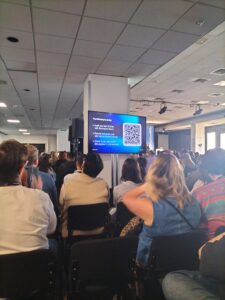
One final note from me: there seems to be an assumption among a good number of presenters that everyone in the audience has the ability to instantly scan a QR code while also paying attention to a fast-moving slide deck. Whether they think we’ve all upgraded to Google Glass or whether they’ve simply never tried to do it from a mid-auditorium seat, we’re not sure. But if you’re presenting at an event any time soon and want to routinely refer to your ‘super special, solve all of your problems’ guide (which I’m sure is brilliant), maybe give people a chance to actually get it down.
A More Serious Note
On a more serious note, Brighton SEO also made something increasingly apparent. Across both journeys, to and from Brighton, the journey was impacted by people attempting to take their own lives on the tracks. This has become an unfortunately familiar part of travel in the last few years but with numbers continuing to increase, it’s a reminder to reach out to those around us and keep checking in. For more information, please visit https://railsuicideprevention.co.uk/about/
BrightonSEO 2026 felt like a more grounded event than last year in some ways. The excitement around AI is still very much there, but it’s being channelled into more practical, actionable thinking. The industry is asking better questions: not just “what is AI doing to search?” but “how do we make our work genuinely useful in this new environment?”
The through-line for us remains the same as ever: produce content that’s actually good. Unique, human, specific, trustworthy, and well-structured. That’s what gets you in front of people, and increasingly, what gets you cited by the machines too.
We’re already taking this year’s learnings into our work. As always, if you’d like to chat through what any of this means for your own digital marketing strategy, feel free to get in touch via LinkedIn or our contact form; we’d love to hear from you.
Lights, Camera, Data Insight!
Nottingham Digital Summit 2025 – Key Takeaways by Dalton Smith
Lights, camera, insight! The Nottingham Digital Summit 2025 rolled out the red carpet for a focused day of marketing brilliance at the iconic Broadway Cinema. Expertly hosted by Hallam – hats off to them for producing such a blockbuster event for the Midlands marketing scene.

At Axon Point, supporting independent businesses and startups, as the Rebel Alliance, we face the challenge of cutting through the digital noise. The Summit highlighted common pitfalls: repetitive content, overlooked PR, and uninspiring B2B approaches that fail to engage.
Sara Galbiati – The head of content at Hallam, gave advice on repurposing assets – turning one webinar into multi-channel formats like blogs, infographics, and videos to reinforce messages. She stressed digital PR for credibility and AI visibility, plus leading with upfront value for memorability.
Meg Garfield and Ben McKinney of Copy or Die, noted the value of leveraging trusted networks and pre-built relationships – “nepotism is your friend” – to extend reach, aligning with our Nottinghamshire community ties.
Barry Adams in True Barry Adams fashion called domain authority “Bulls***’. He also recommended fresh content, tool-independent testing on hobby sites, and a focus on people over algorithms.
Wensy Antoli championed video in B2B, with 154 billion LinkedIn views annually; key elements are cultural references, authentic stories, vivid aesthetics, expert insights, and imaginative customer narratives. B2B sites should prioritise visual appeal, and ads that don’t look like ads perform best.
Leala Jackson framed pitches as stories: hook with a bold opener, introduce the problem, present ideas with examples and data, then end with benefits and an urgent call to action.
Ben Wood’s urged bold differentiation: tap emotional impulses with visuals, zigging when competitors zag to stand out. This will help to get onto your customers day 1 list and they will have you in mind before they have even started searching.
In the spirit of Broadway Cinema’s silver screen, the curtains closed on this cinematic gathering with the Avengers assembling. Thanks again, Hallam!

SEO By The Seaside – Takeaways from BrightonSEO
BrightonSEO is one of the most recognisable SEO and marketing events on the planet and certainly the biggest in the UK and for the first time, AxonPoint was well represented at both days of the event. Callum managed to win a ticket for Friday in the infamous opening ballots and then Leila snagged a ticket later on for Thursday so we got to experience the full shebang from open to close.

As always, there was plenty to learn and take in but with this being the most chaotic digital marketing has been in many years, it was a great chance to learn about all the crazy developments happening, particularly in regards to the rapid advance of AI. With so much to see and explore, it’s a good job we were there to provide our main takeaways from the event and what we can see shaping the future of SEO and marketing in general moving forward.

Before we dive into the meat of the insights, let’s address the most important observation of the day: free ice cream is much more popular after lunch. Also, we now have it on good authority that not every screen in the crowd is busy taking notes. We definitely noticed the odd game of chess here and there!
Now, onto the real takeaways.
AI is here to stay
AI was definitely a large part of BrightonSEO this year as it continues to dominate the conversation and shape the landscape of search for the foreseeable future (see a picturesque example below). It’s been true for a while but AI is very much at the forefront of the game and most of the talks included some mention of AI; whether that be software to make your life/job easier or ways you can use AI tools to maximise output and generate better responses. We always try to be cautiously supportive of AI (if it’s going to be here anyway, we might as well be using it in the right ways) so it was pleasing to see most speakers referring to AI as a supporting player rather than a replacement. AI is brilliant for improving efficiency and reducing work load but it still needs that experience and know-how to drive it and get the best out of it.

Of particular note for AI was the growth of AEO or Answer Engine Optimisation, a rapidly growing branch of digital marketing designed at targeting AI Overviews and other AI search engines as we continue to see that expansion. To be honest, the core tenants of AEO are mostly included in a strong SEO strategy these days anyway; good quality, user-focused content structured in a skimmable way aiming to answer the query that user is having. However, it is still interesting to see more and more SEOs gravitating towards the idea of optimising for AI readers and that’ll certainly continue to shape the type of content we all interact with.
Can we still tell the difference with AI?
What was quite interesting was a talk on whether humans can tell the difference between AI and human. Anyone who has read a decent amount of GPT content knows that there is a general flow and structure to that content and certain words can be a dead giveaway. Image content still has an inorganic quality to it that stands out quite clearly, particularly when using humans. Still, that gap is clearly closing and AI content generally performs just as well as compared to human content, partially due to the emotional aspects connected with art and content in general. Used in the right ways to cultivate the feelings you want, AI content can be effective but we would always warn against over-reliance on AI content and a human review process is still key to ensure tone of voice and language is right as well as a proper fact check. AI can still lie and it does it frequently.
Trust Is Still King
The importance of E-E-A-T (Experience, Expertise, Authoritativeness, and Trustworthiness) isn’t going anywhere. In fact, it’s arguably more important than ever. Search engines are leaning harder into surfacing trustworthy, high-quality content—especially as misinformation spreads quickly and users look for reassurance that what they’re seeing is accurate.
Video content and social media are playing a bigger role in this. They’re tools not just for visibility but for demonstrating expertise and authenticity. Adding a human face to your content can go a long way in building the kind of trust that algorithms (and people) value.
The Evolution of Search
Search continues to evolve at a breakneck pace, but one thing was made clear throughout BrightonSEO; traditional SEO is still the foundation. What’s changing is everything being layered on top. We’re now operating in a world where social media platforms need to be treated as search engines in their own right—especially as video content from platforms like TikTok and Instagram increasingly finds its way into search engine results pages (SERPs).
The singular focus approach to digital marketing is no longer optional. Brand, UX, AI, data, and paid media now all intersect with SEO. Each plays a role in the search experience and can’t be ignored anymore. The future of SEO is integrated, and success will come from agencies that understand how all the parts move together.

FAST Content
As mentioned above with AI, content is more important than ever in how it shapes your digital marketing strategy. With AI tools like ChatGPT and Google’s SGE (Search Generative Experience) pushing search toward more conversational experiences, the way people interact with content is changing. We’re not just optimising for queries anymore; we’re optimising for intent, tone, and even emotion.
One standout framework that cropped up was FAST content—First-person, Authentic, Social, and Trusted. This reflects a shift in how content needs to perform. It’s no longer just about keywords and backlinks. The best-performing content is grounded in real experience, shows social proof, is clearly purposeful, and builds trust with the audience.
People are becoming savvier, and the content that resonates most is the content that feels human. As we’ve said, it’s that emotive element that people react to. Audiences want to hear from people, not brands. They want clarity, relatability, and substance over fluff. Whether you’re writing blog posts, recording a podcast, or creating a TikTok, these principles are becoming non-negotiable.
Everyone hates GA4 (but it can be better)
Perhaps the most personally useful section of the day was a round of talks on Google Analytics 4. Like most digital marketing agencies, we’ve had our frustrations in migrating from Universal Analytics to GA4. While the tool looks far nicer with the sleek modern UI and it has a lot more user protection functionality (a major positive overall), there’s been plenty of teething problems, particularly in terms of how it tracks data and actually groups it (the dreaded unassigned/direct problem has plagued many a user for example).

Given how packed the session was and the knowing laughs that arose anytime a particular pain point was mentioned, this is still clearly a major obstacle for many agencies and marketers. It was therefore a relief to gain a lot of very good tips and tricks during this session. In particular, there was a lot of discussion around monitoring and auditing the data and getting most value out of blog posts and established content. We are big into data-driven marketing here at AxonPoint and refreshing old blog posts is something that we do regularly so we definitely pick up some useful pointers to help refine and optimise that process.
Representation Matters
Something that’s becoming increasingly important is website accessibility. Basic accessibility has always mattered, but with the incoming European Accessibility Act, it’s about to become a legal obligation for many businesses. If you trade within the EU, you’ll need to comply with accessibility standards or risk fines, legal action, and reputation damage. The act comes into force on June 28, 2025, and we highly recommend reading up on the requirements and ensuring your site is compliant.
Accessibility came up in several of the talks, such as writing better and user-friendly alt tags, making sites more accessible for keyboard users and making CTAs more accessible and easily translatable. This is something that we have been conscious of for a while, particularly in the case of alt tags so it was good to get a load of transferable insight and examples that we will definitely take forward.
BrightonSEO 2024 was a whirlwind of insight, innovation, and ice cream. At AxonPoint, we’re already taking these lessons forward into our work. While AI is definitely shaking up the game, the overall goal is still the same. Make relevant content that people want and you’ll be on the right path.
With that big marketing event out of the way, we’ll be back in more familiar waters over the next few weeks and months at events around Nottingham and Derby, saying hello and enjoying a peruse of the complimentary buffet. If you fancy a chat, our door is always open so feel free to get in touch on LinkedIn or via our contact form. We look forward to hearing from you!
Black Friday Alternatives:
Exploring Healthier, More Conscious options
Every year, Black Friday signals the start of the holiday shopping season, with retailers enticing consumers through deeply discounted prices and competitive offers. But amid growing concerns over consumerism, many brands are finding innovative alternatives to the traditional Black Friday rush. From platforms like Create that connect conscious consumers with unique brands, to community-oriented and eco-conscious shopping events, retailers are crafting more mindful, impactful approaches to the holiday shopping season. This post will explore some popular alternatives to Black Friday and examine how they benefit both businesses and customers.

BackMarket’s famous ‘any old Friday’ campaign
Cyber Monday: An Online-Only Option
One of the most popular alternatives to the Black Friday frenzy is Cyber Monday, a digital shopping event that takes place the Monday following Thanksgiving. Designed to keep deals accessible but entirely online, Cyber Monday provides a streamlined shopping experience that reduces the need for physical store resources and broadens the reach to a global audience. Embracing Cyber Monday allows businesses to engage with the rising trend of online shopping while minimising operational costs—benefiting both the consumer and the retailer with a seamless, efficient shopping experience.
Small Business Saturday: Supporting Local Enterprises
To spotlight the importance of supporting small businesses, Small Business Saturday encourages consumers to shop at independently-owned stores rather than big-box retailers. This event fosters community by driving local spending, which directly supports neighbourhood economies. For businesses, participating in Small Business Saturday can build a sense of loyalty, as consumers are often drawn to the unique products and personalised services that small retailers provide. In an era where shoppers increasingly value connection and authenticity, this approach can make a lasting impact, helping local businesses stand out during the holiday season.
Green Friday: Sustainable Shopping for a Brighter Tomorrow
With environmental consciousness on the rise, many companies are choosing Green Friday, a sustainable alternative to Black Friday that encourages eco-friendly shopping practices. Green Friday often involves initiatives like reduced packaging, promotion of recycled goods, and the use of sustainable materials. For brands, going green appeals to a growing consumer base that values environmental responsibility. Adopting a sustainable approach not only strengthens customer loyalty but also positions businesses as leaders in corporate social responsibility, which can drive trust and long-term success.
Extended Black Friday Deals: A Relaxed Approach to Sales
Some brands spread their Black Friday deals over several days or weeks rather than limiting them to a single day. By extending the promotion period, businesses reduce logistical challenges, prevent inventory strain, and create a more relaxed shopping experience for customers. This alternative allows consumers to make thoughtful purchases without the pressure of a single-day sale, aligning with the growing movement toward more intentional, mindful shopping. For businesses, it’s a win-win: they capture the excitement of Black Friday while fostering a positive shopping experience that builds brand loyalty.
Flash Sales and Limited-Time Offers: Creating Seasonal Urgency
Brands looking to build urgency without committing to a large-scale sale event often turn to flash sales and limited-time offers. These promotions create a sense of immediacy, encouraging customers to act quickly. Limited-time offers can be strategically placed throughout the holiday season, providing businesses with a tool to drive periodic bursts of engagement without overwhelming inventory or resources. From a consumer perspective, these timed deals add a layer of excitement without the overwhelming pressure of a crowded shopping season.

Breaking Away from Black Friday: Alternative Campaign Themes
In recent years, some brands have embraced entirely different messaging to set themselves apart from Black Friday’s consumer-driven model. Here are three prominent themes that have gained traction:
- Fair Friday or Do Good Friday: Companies use this day to focus on charitable initiatives or partner with non-profits, encouraging consumers to make purchases that contribute to a meaningful cause. This approach fosters brand trust and highlights corporate social responsibility, resonating with customers who want their spending to have a positive social impact.
- Anti-Black Friday: Certain brands have opted to boycott Black Friday altogether, actively promoting ethical consumption and challenging hyper-consumerism. This approach can involve closing online stores on Black Friday or offering alternatives that promote mindful shopping. By openly addressing the impact of overconsumption, these brands connect with an audience that values sustainability and thoughtful purchasing.
- Normal Friday: Some luxury and boutique brands maintain business as usual on Black Friday, focusing instead on showcasing new collections or unique products for the season. This choice aligns with their premium image and allows them to avoid the hype of sales while fostering a sense of exclusivity.
Communicating Your Alternative Campaign Effectively
If you’re considering an alternative Black Friday approach, clear communication is essential. Just as with traditional sales, ensure that your customers are informed through easy-to-understand messaging and reminders. Display banners, pop-up notifications, or landing pages to explain your campaign and offer a consistent experience throughout their visit.
Looking Beyond Black Friday for a More Meaningful Shopping Season
As more brands explore alternatives to the traditional Black Friday event, the retail landscape is evolving to include more sustainable, community-driven, and thoughtful shopping experiences. By thinking beyond the typical sales format, businesses can connect with consumers in ways that resonate on a deeper level. Whether through digital engagement, community support, sustainability efforts, or tailored promotions, these alternatives create a dynamic holiday season that offers something for everyone—building loyalty, enhancing brand identity, and encouraging a healthier approach to consumption.
- PPC Consultancy Nottingham: Is Paid Search Worth It for Small, Independent Businesses or Is It Just for Big Budgets?

- Setting Up Your Google Analytics 4 Account Properly

- What is GA4? A practical guide to Google Analytics 4

- Can You Run Google Ads Without a Website? A Straight Answer for Trade & Service Businesses
- Google Search Console Updates in 2026
Nottingham Charity Walk
Supporting Base 51’s Youth Mental Health Services
As part of our commitment to local businesses, we often look to support and give back to the local charities and organisations that help to make our community a better place and support those who need it most. Over the last few years, we’ve supported several events and functions and recently, we had the opportunity to do so once again with our team proudly participating in a 10-mile charity walk in support of Base 51, a Nottingham-based youth mental health charity.
Jave, Callum and, the newest member of our team, Leila joined a great turnout of local businesses and groups to help raise awareness and funds for vital mental health services that Base 51 provides to young people in Nottinghamshire. Walking from Nottingham Train Station to Beeston Marina and then back, our team braved the mist and fog and completed the walk in just under 4 hours with Jave still managing to make a 2:30 meeting (business never sleeps!).

In all seriousness, it was a good day out for a really great cause and we are always looking to support wherever possible. As a team that has had the pleasure of working with a lot of talented apprentices, many of whom are starting their career journey with us, we are always aware of the importance of mental health and ensuring an open and supportive environment where possible. 53% of young people in the county have experienced mental health issues in the past year, making initiatives like this walk crucial in raising awareness.
The mental health crisis affecting young people is an ever-growing problem and one that requires the support of charities such as Base 51 and that is something that we wholeheartedly support. Base 51’s services go beyond counselling, with initiatives aimed at reducing social isolation and offering young people the support they need to build brighter futures. Your donations will go directly towards helping to expand these crucial services.
For the team, the walk also gave us a good opportunity to reset and take stock of where we are going and what the plan for the future looks like. As will be familiar to many small businesses, it’s been an incredibly packed year of change and shocks and it’s unfortunately rare that we get the opportunity to properly assess and discuss the next steps.
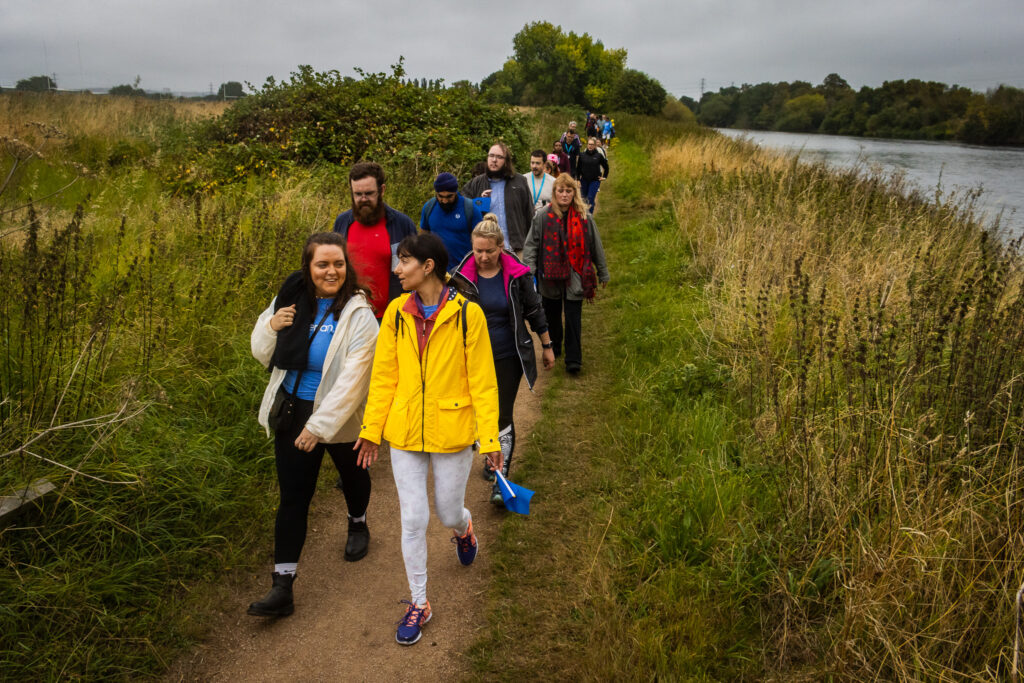
In particular, the walk gave us good insight into what each member of the team on the path that day wanted to achieve as well as giving us time to brainstorm some new ideas, one of which we are starting to develop out into something that could very much define our business moving forward. Time to clear our heads and get our minds off the immediate tasks in front of us was a really rewarding part of the day and we all left feeling a bit more energised, even though the legs might not have agreed(!).
If so much that there is a takeaway from the day, it’s that those catch ups and discussions away from the daily buzz of the workplace are essential and are often where the best ideas can be formed and started. While it may not always need to be on the back leg of a walk along the Trent, it’s always worth taking the time for.
Another reward of the day is that it also gave us an opportunity to meet and talk to a bunch of new faces and some old friends in the Nottingham scene which is always nice. It was great to see such a strong turnout on what was a fairly bleak September morning and it made a nice change of pace from the usual pub brunch networking event that we’ve all become accustomed to.
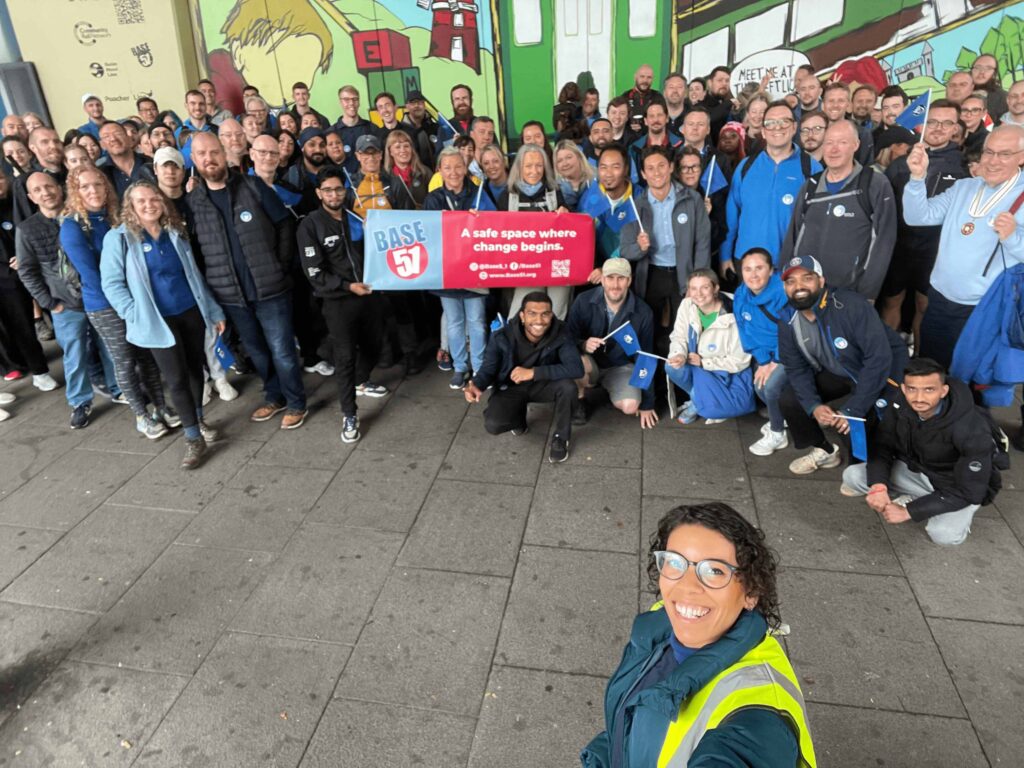
For those who would still like to contribute to Base 51, it’s not too late! You can donate here. We will certainly be looking to do more of these in the future and we hope to see you on the next one!
Supporting The Work of The Rosie May Foundation
Our Passion for Purpose-Driven Work
At Axon point, we believe passion fuels excellence. This drives our work with businesses, from local start-ups to those championing sustainability and better values.
Supporting Charities and Community Projects
Our commitment to meaningful causes has led us to support various local and national charities. We help drive engagement and raise awareness for vital issues. Visit our Community Engagement page for more details.
The Rosie May Foundation: A Beacon of Hope
The Rosie May Foundation, founded in 2004 after a personal tragedy, symbolizes hope through a palm tree. It works in Sri Lanka and Nepal to keep families together, provide opportunities for young girls, and ensure safety with initiatives like pink Tuk Tuks and ThinkPink. Their efforts provide children access to water, education, and family unity. Learn more on their website.

Our Partnership with Rosie May
For years, Axonpoint has proudly partnered with The Rosie May Foundation. We’ve supported their campaigns, including fundraising through the Yorkshire Peaks Challenge. This rewarding effort raised crucial funds and spread awareness.
Amplifying Their Message
We promote the foundation’s events via our monthly newsletter and regular LinkedIn posts. This amplifies their message, reaching wider audiences and fostering community involvement. Highlighting positive work by charities and businesses is a core part of our newsletter, countering negativity with hope.
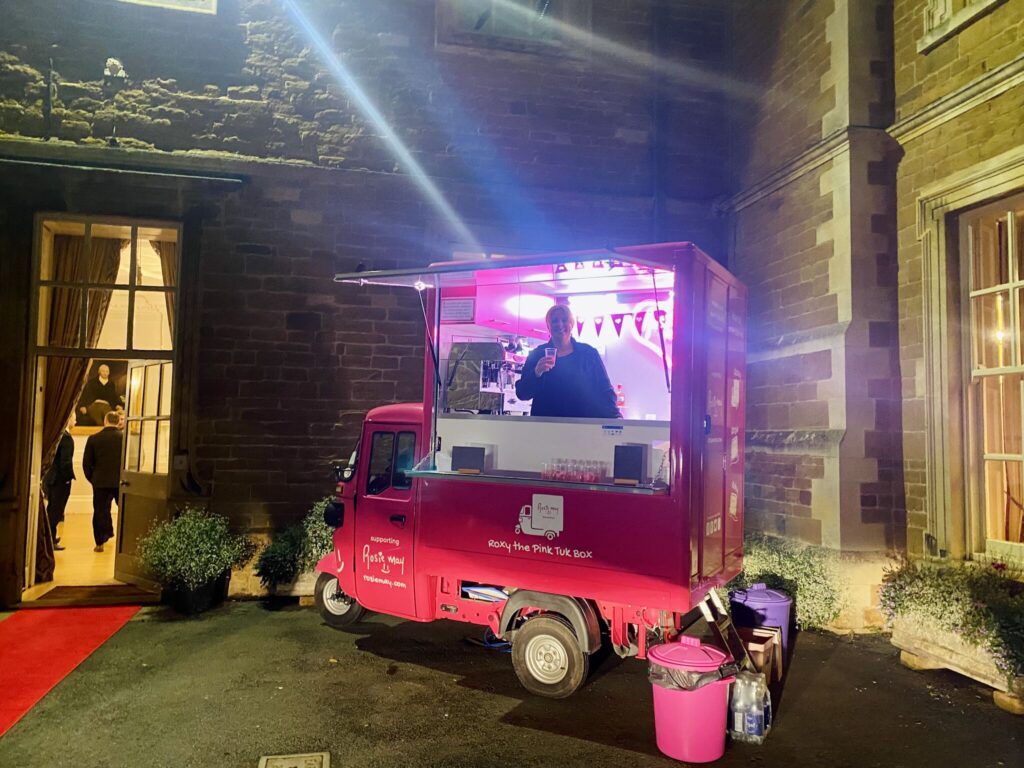
Joining the Rosie May Ball
Our team has been honored to attend the bi-annual Rosie May Ball, a glamorous evening uniting the community to support the foundation’s mission. These events are a highlight of our year.
Don’t Miss the 2025 Rosie May Ball
Join the extravaganza on Saturday, 21 September 2025, at Belvoir Castle. Enjoy a three-course meal, live music, and a charity auction with unique prizes, like a night at the castle. Dance and support a great cause!
Community networking…
At AxonPoint, we believe that the best way to grow our business and widen our horizons is to get out there. It’s what fuels our choice of clients, our marketing strategies and our networking. Wednesday 11th May saw a big day for the company as JJ went to his first solo networking event at Clean Cut Kitchen in Nottingham hosted by KuKu Connect while Jave and myself headed off to the wacky world of Manchester to watch the FA Youth Cup Final from the Theatre of Dreams, Old Trafford as well as attend an art exhibition!

For JJ, a first networking event on his own was a bit daunting but after some encouragement and the promise of some high quality grub, he decided to venture out. KuKu Connect is a networking group where we have made strong connections in the past and as a small local business, these sorts of events are crucial to our growth as well as building relationships. As our junior outreach consultant, JJ is steadily becoming more involved in this area and despite his earlier trepidation, he did well on his own and helped build our base of connections while also strengthening our current contacts. JJ also took on board some of the training we received at the hands of Pam Edwards, a connection we made through this community, who has been coaching us on our networking skills which you can find out about in another upcoming blog post. All in all, it was a successful first event for JJ and with future events on the horizon, it’s promising to be a busy few weeks for the newest member of our team!

For myself and Jave, the destination was further afield to Jave’s second home of Manchester for an art expo in the afternoon and then the football match in the evening. The trip also gave us a chance to catch up with Simone, our social media and google ads manager, who is based in Manchester. The art exhibition was held in Elliot House by the Chamber of Commerce showcasing the work of Ghislaine Howard.
Ghislaine Howard is well known for her work showcasing the human condition through a variety of different expressive forms with an iconic blurred style as showcased by this image of Victor Moses during his time at Stoke City. Ghislaine’s style is one that I find quite interesting and it was nice to be able to see her work up close and personal and take in some of the nuance that is hard to notice in photographs. There was also free champagne and peroni so y’know. When in Rome and all that…

Going to the art exhibition provided us with the opportunity to explore a sort of networking event in a different environment and with new faces which is so useful as being a local business, you can often fall into the trap of relying on the same few connections. Those connections are always useful and valuable but it’s good to expand where possible.
After leaving the event and bumping into Man United legend and controversial pundit Gary Neville, we headed down to the match, my first proper away match and Jave’s first time in the United away end. After walking up the iconic steps, like United legends Roy Keane and Marcos Rojo before us, we settled in for the match of the under 18s, representing two of the most well-regarded academies in world football. The match was a close one until a rash tackle from Forest on the edge of the box led to an incorrect penalty call and a red card, which paved the way for the United team to storm to a 3-1 victory. Both sides can be proud of their accomplishments this season and the Forest side were applauded for their efforts by the incredible away support. The overall attendance set an incredible record of 67,000 fans with around 6,000 forest fans making the trip up. It was a great time and an enjoyable match despite the result.

All in all, it made for a jam-packed but solid day out and one that was quite useful from a work and social point of view. It’s good to get away from the office from time to time, to see new faces and to get some time to really reflect on the business. It also reflects what we want to be as a business. We don’t want to be another agency firm, full of people in suits whose only purpose is to drive sales. We want to be active in our community and to experience new things and meet new people.
Gender stereotyping in Marketing – The Case of the Yorkie Bar

Gender stereotypes have long been ingrained in marketing strategies, a quick watch of the hit series ‘Mad Men’ which focuses on a New York advertising agency in the 60’s is very insightful of how such stereotypes were widely used in marketing. The specific forms of advertising often reinforce traditional gender roles and promote outdated notions of masculinity and femininity. However, the debate comes down to whether such practices are legal? This debate has gained real prominence in recent years, as regulators and consumers alike demand more responsible and inclusive advertising.
Recent years have seen a significant shift in consumer expectations and regulatory standards, demanding advertising that embraces responsibility and inclusivity. A notable example that highlights the complexities of gender stereotyping in marketing is the Yorkie bar campaign by Nestlé. With slogans like “it’s not for girls,” Yorkie’s branding strategy was overtly masculine, excluding potential female consumers with a message that certain products are meant solely for men.
These controversial slogans and marketing approaches have sparked debates surrounding the legality of gender stereotyping in advertising. These debates could be directly attributed to the rules which were passed in 2019 by the UK’s Advertising Standards Authority (ASA) who introduced new rules aimed at banning harmful gender stereotypes in advertising, the specific rules are the Code rules 4.9 (CAP Code) and 4.14 (BCAP Code). With the passing of these rules, the ASA stated that “ads must not include gender stereotypes that are likely to cause harm, or serious widespread offence”.
This move by the ASA reflects a growing awareness of the impact of gender stereotyping in marketing and its potential of perpetuating inequality and discrimination. It did not take long either for the first ads to get banned as they had contravened these stereotyping rules. The ads in question were produced by Volkswagen and Philadelphia Cream Cheese and they were said to have depicted gender stereotypes negatively to the point that they broke the UK’s advertising rules. Both companies denied claims that their adverts promoted gender stereotypes, however, they were still banned nonetheless. Both adverts can still be found online though if you feel like making your own judgements on whether they crossed the gender stereotype line.

This evolving landscape signals a pressing need for brands to reassess their marketing strategies, ensuring they align with contemporary values of diversity and inclusion. Yorkie, for instance, preempted regulatory action by revamping its branding in 2012, moving away from gender-specific messaging. Though the replacement slogan, “man fuel for man stuff,” navigates a gray area, it marks a departure from explicitly gendered advertising.
Key Takeaways for the Digital Marketing Sector
The journey of the Yorkie bar from gender-exclusive marketing to more inclusive branding practices underscores a pivotal learning curve for the digital marketing industry:
- Legal and Ethical Implications: The legal frameworks established in the UK and other jurisdictions serve as a reminder of the importance of avoiding discriminatory advertising. Failure to comply not only risks legal repercussions but can also tarnish a brand’s reputation.
- Consumer Expectations: Today’s consumers are increasingly socially conscious, demanding advertising that respects diversity and promotes inclusion. Brands that cling to outdated stereotypes risk alienating this growing demographic.
- Brand Responsibility: It’s incumbent upon brands to adapt their marketing strategies to reflect modern societal values. The proactive changes made by Yorkie exemplify how brands can evolve to meet new expectations without compromising their identity.
The narrative surrounding Yorkie’s marketing evolution offers valuable insights into the broader discourse on gender stereotyping in advertising. As digital marketing professionals, we must continually evaluate and adapt our strategies to foster an environment that respects and celebrates diversity. In doing so, we not only comply with legal standards but also contribute to a more inclusive society, enhancing brand loyalty and consumer trust in the process.
For digital marketing agencies like Axon Point, the case of the Yorkie bar serves as a poignant reminder of the power of marketing to shape societal norms and the responsibility that comes with it. By championing inclusive and responsible advertising, we can lead the way in building brands that resonate with today’s diverse consumer base, setting a new standard for ethical marketing practices in the digital age.
Thirsty for more? Click the links below for more musings from the team…
- PPC Consultancy Nottingham: Is Paid Search Worth It for Small, Independent Businesses or Is It Just for Big Budgets?
- Setting Up Your Google Analytics 4 Account Properly
- What is GA4? A practical guide to Google Analytics 4
- Can You Run Google Ads Without a Website? A Straight Answer for Trade & Service Businesses
- Google Search Console Updates in 2026
How We Outranked Harrods on Google
SEO is often seen as a mug’s game. The comedy challenge show. A million people trying to get through the one door. It can often be disheartening to look at the front page for your key terms and see the same few big brands on top, unchallenged and undisturbed while you sit below like a wolf howling at the moon.
However, it doesn’t always have to be like that. SEO is all about strategy and time and picking the right spots. Sure, those bigger companies will have the advantage but with the right planning and proper strategy, you can find the chink in the armour, the achille’s heel and be able to stand at the top of the mountain with the big boys. This is the story of how we managed to outrank some of the biggest clothes retailers in the country.
Now, a bit of context. This client was an average sized retailer, specialising in sustainable cashmere products and they ranked decently well for their holy grail, a set of 7 keywords often called the ‘sensational 7’ (this is an important tip for growth, an SEO agency can help bulk out and suggest key terms but you should have a general idea of what you want to rank for). This included terms such as ‘sustainable cashmere’, ‘cashmere sweaters’ and the big one ‘luxury cashmere’, which was considered the essential brand term.
Now our SEO work is always the same so we started as we do with every SEO campaign, with an audit which quickly identified some key issues with the site. The site’s link profile was fairly weak and the metadata was poor with over 200+ duplicate titles and descriptions.
So we dove deep into their data with everything from:
- Organic traffic levels
- Health of organic traffic
- What they were already ranking for
- Niche and easy keyword opportunities around the ‘super 7’.
- Competitor research
- And other areas to gain important info and insight…
After we examined the site, it became clear that while they ranked ok for their key terms, their reach was relatively low. They only ranked for around 200 key terms, which isn’t a terrible number but for a national retailer, you would expect a much wider range of terms. This became a key focus to identify opportunities around the ‘sizzling 7’ to improve their rankings for not just those terms but also the key 7 terms.
This combined with the findings from our audit led to a simple strategy of divide and conquer, improving the metadata across the site continuously while also looking for outreach and off-site opportunities. This meant crafting content designed to engage audiences as well as improve the visibility of the site and client.

The growth was gradual at first but then it took off like a rocket. Impressions massively improved as did keyword rankings. Despite a massive increase in rankings (234 to 2,500+), we also saw a major increase in average ranking. Traffic also increased and with it came an increase in traffic health. This, all in all, led to a rapid increase in sales (up 20% in just 6 months).
This increase can be credited to simply ranking better but it can also be attributed to ranking for more product specific terms that increased visibility and user interest. It’s all good and well ranking well but if you don’t rank for the right things, it isn’t going to matter to your sales team.
Where this growth was most crucial was in the ‘suave 7’ that went from ranking around the low 10s to ranking in the top 3 over the likes of Harrods and Marks and Spencers. At one point, the site was ranked number 2 in the world for ‘luxury cashmere’ despite still being a relatively small retailer in the UK and doing nothing different with their company other than their SEO strategy.
This is why we push the idea of an open, honest and thorough SEO strategy above all else. If you plan ahead and do the right things, you can have major, relatively quick success even in the most competitive industries and what’s good about SEO is that once you are up there, it takes quite a bit of time before you are knocked off if at all. It’s not like paid search where you turn off the proverbial tap and suddenly all that work and progress just stops. SEO is built to last and allows you to go from howling at the moon and sitting on the edge and casting off a fishing line.
If you would like to discuss an SEO project with us, either to get some advice or our help, we’d love to hear from you so please feel free to reach out. We look forward to hearing from you.


