Is Web 2.0 Link Building Still Worth It for SEO in 2025?
If you’ve been dabbling in DIY SEO or working with an agency, you’ve likely come across the term Web 2.0 backlinks. Once hailed as a quick and easy way to boost rankings, they’ve become a bit of a question mark in today’s SEO landscape. So, do Web 2.0 links still hold value, or are they a sure fire way to a search engine penalty?
We thought to take a fresh look at Web 2.0s, how they’re used in link building, and whether they still make sense for independent businesses in 2025.
What Are Web 2.0 Links?
Web 2.0 platforms are a bit like rented space in a digital community centre. Sites like WordPress.com, Blogger, Medium, and Tumblr allow anyone to set up a blog or mini-site – often for free – and then be used to create and publish useful content and link back to your main website.
These links are what we call ‘Web 2.0 backlinks’ and effectively connections from one of your mini-sites back to your own website

Why Did They Become Popular?
The short answer is SEO’s quickly find what search engines like Google look for when deciding which websites should rank over others and backlinks have always been an integral part of the ‘algorithms’ behind this. Web 2.0 site are quick and easy to set up and in the early 2000s you could quickly and cheaply create a network of free blogs with links directed back to your main site(s) and see real movement in your search rankings. It was like handing out business cards on every street corner and watching customers pour in – no questions asked.
However, things have changed. Google’s algorithms now prioritise quality over quantity. But that doesn’t mean Web 2.0 links are entirely obsolete.
Are Web 2.0 Backlinks Still Safe and Effective?
Yes – but like with many things in this game, there are best and bad practice routes to follow…
Web 2.0 backlinks are generally safe if used responsibly. Like seasoning in a dish, a little can go a long way. Dumping dozens of low-quality Web 2.0 links onto your site overnight? That’s likely to raise red flags with search engines and could backfire.
Instead, modern SEO uses Web 2.0s as part of a tiered strategy. Rather than linking them directly to your main website, they link to another piece of content that already links to you – giving your backlink profile a boost without drawing too much attention.

The pros
Here’s where Web 2.0s still shine – especially for independent businesses:
- Cost-effective: Most platforms are free. You don’t need a big marketing budget to get started.
- Full control: You can write your own content, set your own tone, and manage updates as you see fit.
- Trusted platforms: Hosting your content on sites like Medium or WordPress.com gives it a slight credibility boost simply because these domains are already trusted by Google.
Adding a Web 2.0 link is a bit like using a trusted family recipe. The ingredients—the platform—are familiar and well-loved, and your content is a thoughtful addition that complements what’s already there. When done with care, it blends in naturally, enhancing the whole without drawing too much attention to itself. That’s the quiet strength of Web 2.0—when integrated smoothly, it just works.
The cons (And How to Avoid Them)
Of course, it’s not all upside. There are a few watch-outs to keep in mind:
- Low authority on new subdomains: Just because a platform has high domain authority doesn’t mean your new blog on it will too. It takes time and content to build up trust.
- Time-consuming: Each Web 2.0 site needs content, structure, and ongoing activity. A “ghost town” blog won’t help your rankings.
- Easily misused: Over-optimising your links or spamming irrelevant keywords can do more harm than good.
In short, Web 2.0s only work when they’re treated like real mini-websites – not shortcuts.
Best Practices for Using Web 2.0 in 2025
If you’re going to use Web 2.0 link building, here’s how to do it smartly:
- Create useful, readable content – Aim for 500–1,000 words that actually help the reader.
- Include basic pages – An “About” or “Contact” page adds legitimacy to your mini-site.
- Use keywords naturally – Don’t force it; just write as you would speak to a customer.
- Be consistent – Post over time, not all in one go.
- Diversify your backlinks – Don’t rely on Web 2.0s alone. Combine with guest posts, citations, and high-authority editorial links.
So… Are Web 2.0s Worth It?
Web 2.0 links aren’t a secret ingredient that transforms your SEO overnight. Think of them more like a reliable spice in your cupboard—used thoughtfully, they enhance the overall flavour of your strategy, but they’re not the whole dish.
For independent businesses watching the budget, they offer a simple way to add depth and variety to your backlink profile—the kind of well-balanced blend that search engines tend to favour. But as with any good recipe, the results depend on quality and care, not just speed.
If you’re wondering whether Web 2.0s are the right addition to your SEO mix, or how to use them without overdoing it, we’re here to help. Get in touch for a free consultation and let’s refine your strategy together.
4 Reasons Directory Submissions & Citation Listings Boost SEO
At Axon Point, we know that visibility is key to success, and that’s why we’re committed to helping businesses make the most of their online presence. Whether it’s about optimising profiles or tailoring strategies for specific industries, we believe in strategies that make a difference.
Take SEO-friendly listings, for example. These ensure that every submission is primed for search engines, leveraging the right keywords, categories, and descriptions to boost rankings. But are they still relevant and effective in modern SEO? In this article, we explore the benefits, caveats and best practice methods to help boost SEO for your business.
The Benefits of Directory Submissions
When approached thoughtfully, directory submissions can offer several tangible benefits:
1. Boosting SEO and Search Visibility
For local businesses, being listed in trusted local directories like Google Business Profile, Yelp, or regional directories can significantly improve local SEO rankings.
- Why it Matters: Local SEO thrives on citations—mentions of your business’s name, address, and phone number (NAP) across the web. Consistent and accurate NAP listings help search engines verify your business’s legitimacy, boosting your visibility in local results and Google Maps.
2. Building Credibility and Trust
A presence on high-quality, reputable directories can make your business appear more credible to potential customers.
- Example: A law firm listed on Avvo or a restaurant featured on TripAdvisor is more likely to be trusted than one with no such presence.
3. Driving Referral Traffic
Niche directories often attract users who are actively looking for solutions in your industry.
- Why it Matters: Users browsing these directories are often further along in the decision-making process, making them high-conversion prospects.
4. Enhancing Your Backlink Profile
Directories with high domain authority can provide valuable backlinks to your site, which still plays a role in improving your domain’s authority.
- Why it Matters: While not as impactful as editorial backlinks, high-quality directory links can diversify your backlink profile and send trust signals to search engines.
The Caveats of Directory Submissions
It’s not all sunshine and roses. If done incorrectly, directory submissions can harm more than help your SEO efforts. Here’s what to watch out for:
1. Low-Quality or Spammy Directories
Submitting to irrelevant or spam-filled directories can result in poor-quality backlinks, or worse, penalties from search engines.
- Solution: Focus on directories with strong domain authority and real user engagement.
2. NAP Inconsistencies
Inconsistent information (e.g., variations in your business name, address, or phone number) across directories can confuse search engines and hurt your local rankings.
- Solution: Audit and standardize your business details before submitting.
3. Minimal SEO Impact from Generic Directories
General directories like Yellow Pages or similar low-quality platforms often provide little to no link equity and rarely drive meaningful traffic.
- Solution: Prioritize industry-specific and local directories that are relevant to your business.
Best Practices for Effective Directory Submissions
To make directory submissions work for you, it’s essential to approach them strategically:
- Prioritise Relevance Over Quantity
- Submit only to directories relevant to your industry or local area. Examples include health directories like WebMD or local business directories like Google Business Profile.
- Ensure Consistent NAP Information
- Double-check that your business name, address, and phone number are consistent across all listings to avoid conflicting information.
- Complete Profiles with Rich Details
- Include high-quality images, a compelling description of your business, and links to your social profiles.
- Avoid Duplicate Listings
- If your business is already listed, claim the listing and update it rather than creating a new one.
- Mix Dofollow and Nofollow Links
- Not all backlinks need to pass link equity; having a natural mix of dofollow and nofollow links is better for your SEO profile.
- Track Results
- Use tools like Google Analytics to measure referral traffic from directories and assess their value to your overall strategy.
Examples of High-Impact Directories
Local Directories:
Industry-Specific Directories:
- Healthgrades (Healthcare)
- Avvo (Legal)
- G2 or Capterra (Tech and SaaS)
Reputable General Directories:
Are Directory Submissions Worth It in 2024?
The short answer: Yes, but only if done selectively and with relevance in mind. In a world where search engines prioritise quality and user experience, directory submissions should never be your sole focus. However, they can boost SEO strategy by increasing local visibility, building trust, and diversifying their backlink profile.
If your business relies on local traffic or niche audiences, directories remain a useful tool. The key is to avoid outdated “spray and pray” tactics and instead approach submissions with precision and purpose.
Need help identifying the right directories for your business? At Axonpoint, we specialise in local SEO strategies that help businesses thrive in competitive markets. Contact us today to find out how directory submissions and other modern SEO techniques can boost your online visibility and drive real results.
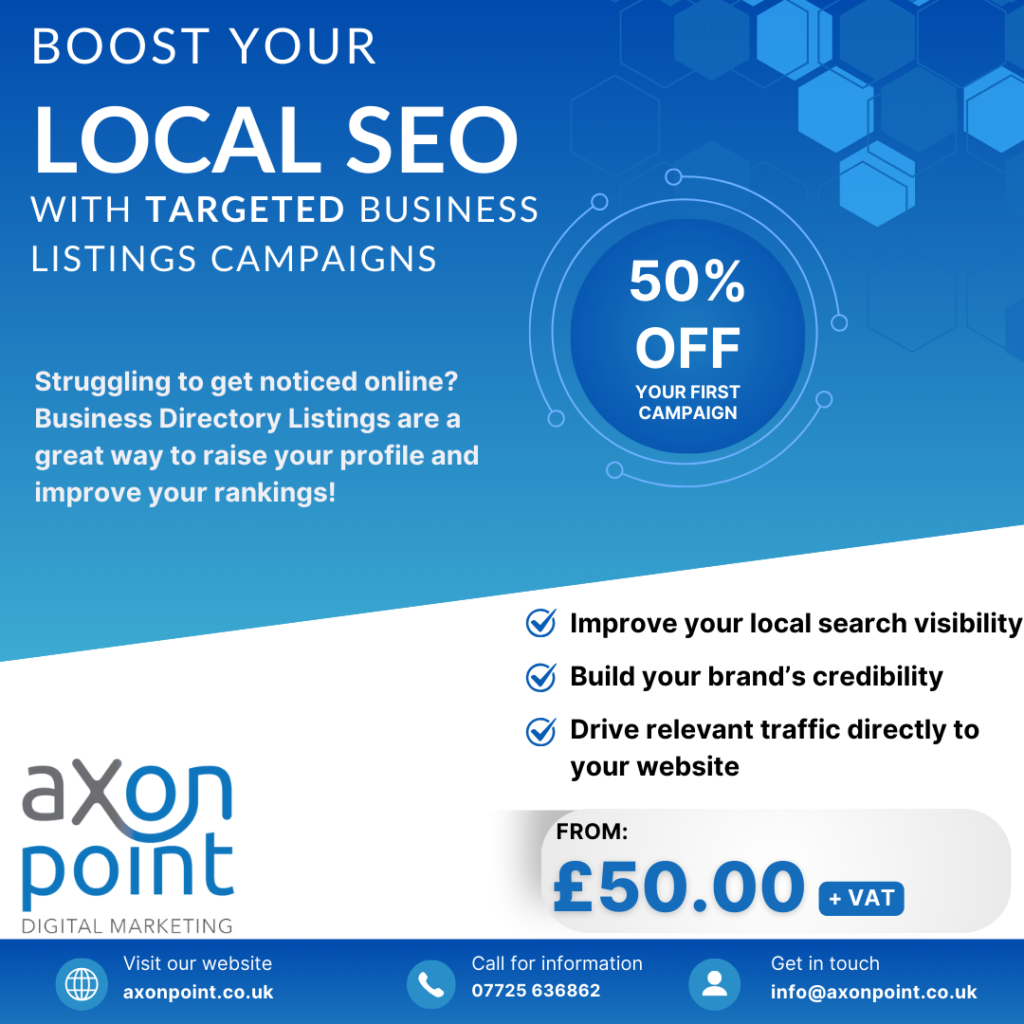
To get 50% off your first campaign, complete the short form below…
Effective Outreach Strategies for Networking
Today, where connections can be made with a click, the art of outreach remains a cornerstone of networking and relationship building. Whether you are a business aiming to extend your market attainment or an individual seeking to build professional relationships, mastering outreach strategies can significantly enhance your networking efforts and growth opportunities. At Axon Point, we understand the power of strategic outreach in transforming connections into lasting relationships, growing your community.
Understanding The Power of Outreach
Outreach is more than just sending emails; it’s about creating genuine connections and building relationships that can lead to meaningful collaborations and opportunities. Effective outreach involves understanding your audience and leveraging various channels to communicate your value proposition. By defining clear goals, personalising your approach, and incorporating effective backlink and PR strategies, you may considerably increase your outreach efforts.
Crafting Your Outreach Strategy
- Define Your Goals: Before embarking on any outreach marketing campaign, it’s crucial to define your goals. Are you looking to increase brand visibility, build partnerships, or enhance your professional network? Clear goals will guide your outreach efforts and help you measure success.
- Identify Your Target Audience: Understanding who you want to reach is essential. Research and identify the individuals or organisations that align with your goals. This may include industry influencers, potential clients, or partners. Tools, which include LinkedIn and industry-specific directories, can be invaluable in this process.
- Personalise Your Approach: A one-size-fits-all approach rarely works in outreach. Tailor your email to the specific needs and interests of your target audience. Personalised outreach shows that you have done your homework and are genuinely interested in building a relationship rather than just making a sale.
- Take Advantage of Various Channels: Effective outreach frequently involves a mixture of channels. Email, social media, and industry events are just a few options. Each channel has its strengths, and using a combination can increase your chances of making a meaningful connection. At Axon Point, we emphasise the importance of multiple channels to reach a broader audience.
To ensure that your outreach efforts are effective, it is important to track and measure your success. Key Performance Indicators (KPIs) may consist of the variety of new connections made, the quality of backlinks acquired, media coverage received, and overall engagement levels. Regularly reviewing these metrics will help you refine your strategy and achieve better results over time.
At Axon Point, we specialise in helping businesses refine their outreach strategies, optimise their online presence, and build strong, lasting connections. Explore how our expertise can support your outreach and networking efforts. Visit Axon Point to learn more about our services and start building meaningful relationships today.
More From The Blog…
- PPC Consultancy Nottingham: Is Paid Search Worth It for Small, Independent Businesses or Is It Just for Big Budgets?
- Setting Up Your Google Analytics 4 Account Properly
- What is GA4? A practical guide to Google Analytics 4
- Can You Run Google Ads Without a Website? A Straight Answer for Trade & Service Businesses
- Google Search Console Updates in 2026
Last-Minute Backlink Outreach Strategies for 2025 SEO Success
As 2024 draws to a close, businesses are in a sprint to tie up loose ends and prepare for the challenges ahead. One area that deserves particular attention is backlink outreach. The digital landscape is rapidly changing, and staying ahead of the curve in your PR and backlink strategy is essential for 2025. With search engines like Google continuing to prioritise high-quality and authoritative links, refining your outreach strategy now can make a significant difference as you face the new year.

In this article, we’ll explore some last-minute PR tactics that can help you solidify your backlink outreach strategy, setting you up for success in 2025.
Build-Relationships for Long-Term Gain
In the rush to secure backlinks before the year ends, it’s easy to fall into the trap of quick wins. However, backlink outreach should be viewed as a long-term game, not just a numbers race. In the final months of 2024, focus on strengthening relationships with industry influencers, journalists, and bloggers who can provide sustained link-building opportunities.
Reach out to past collaborations, re-establish connections, and offer fresh, valuable content. Building the relationship again ensures you have trusted partners who will continue to link back to your site in the coming months, helping you maintain consistent SEO growth in 2025.
Leverage the Holiday Season for PR
The holiday season offers unique opportunities for PR outreach. Journalists and bloggers are often looking for timely, seasonal content material over the last quarter of the year. This is the perfect time to pitch ideas for holiday-themed articles or year-in-review pieces that naturally link back to your site.

Focus on Link-Worthy Content
While PR and outreach are critical, your achievements hinge on having link-worthy content. Before the end of 2024, take a close look at your website and identify pages or blog posts that naturally backlinks. If you find gaps, invest time in creating authoritative, well-researched content that industry leaders would want to link to.
Evergreen content, such as comprehensive guide insightful case studies, or infographics, have a great tendency to perform well in backlink outreach. Make sure your content offers value that others can’t resist sharing. A few high-quality backlinks from top-tier sites can outweigh dozens of low-quality links, so always aim for substance over quantity.
Capitalise on AI-Driven PR Tools
2024 has been a year of rapidly technological advancements, with AI-driven PR tools, making waves in digital marketing. If you have not already, now is the time to integrate with these tools into your backlink outreach strategy. AI can help you identify potential backlink opportunities faster, analyse the value of the website where you are targeting, and automate follow-ups with journalists and bloggers.
Using AI-powered PR tools allows you to scale your outreach efforts efficiently, especially as time becomes tight at the end of the year. These tools can help personalise pitches, ensuring your outreach does not feel like spam, which is key to earning meaningful links as you transition into 2025.

Monitor and Update Your Backlink Profile
Before the year ends it’s important to conduct an audit of your current backlink profile. Use tools like Ahrefs, or Moz, to assess the quality and relevance of your existing backlinks. Remove toxic links that could harm your SEO and focus on strengthening the healthy ones.
As search engines like Google continue to refine algorithms, low-quality backlinks can become a bigger liability in 2025. By taking proactive steps now to ease up your profile, you’ll make a certain potent foundation moving ahead.
Use Data to Guide Outreach
The last quarter of the year of 2024, is the right time to take the data driven approach to backlink outreach. Review the performance of your previous outreach campaigns to see what worked and what it did not. Identify the types of content that attracted the most backlinks, the pitches that received the best responses, and the industries or websites that offered the most valuable links.
You can refine your outreach strategy and head into 2025 with a focused, informed plan by making the right plans based on this data. Being strategic with your outreach ensures you are targeting the right opportunities and maximising efforts.
The final months of 2024 are an opportunity to fine-tune your PR and backlink outreach strategies to prepare for the challenges of 2025. By focusing on relationship-building, creating link-worthy content, leveraging AI tools, and auditing your existing backlinks, you will enter the new year with a solid foundation for success.
As SEO and digital marketing experts, adaptability is fundamental. The movements you take now will impact how well you navigate the converting panorama in 2025. So, do not wait, start imposing these last-minute tactics today and position your business for growth in the coming year.
10 Creative Backlink Strategies

Building backlinks is a vital strategy for boosting your website’s authority and improving its search engine ranking with creative backlink strategies. It’s also one of the most notoriously challenging aspects of online marketing. With countless sites vying for attention, how can you make your efforts stand out?
Instead of just sending out masses of emails hoping for a response, you need to get creative, think outside the box, and consider what content you’d be likely to link back to for your business. Below, you’ll find 10 examples of ways to create valuable content that is more likely to generate high-quality backlinks for your business. No matter how you approach it, it’s still an uphill battle, but at least you’ll have a solid plan to reach the top…
- Craft Irresistible, Shareable Content
Content is the backbone of any successful backlink strategy. But to attract high-quality backlinks, your content must be of significant value that people can’t help to link back. If you are able to provide sites with something that is distinctly you, you put yourself in the position where they are coming to you, rather than the other way around. For your content to stand a chance of catching the eye, it needs to be :
- Valuable – Offer insights or solutions that your audience cannot find somewhere else and answers questions they actually want answering.
- Unique – Stand out from the crowd with fresh perspectives driven by your knowledge or expertise.
- Engaging – Make your content so compelling that others cannot help but share it.

Think along the lines of:
- In-depth guides that leave no stone unturned
- How-to articles that solve common problems.
- Infographics that visualise complex data in an easy-to-understand way
- Original research that provides new insights into industry trends.
- Guest Blog with a Niche Focus
Guest blogging is nothing new. It’s an industry that has continued to grow and while the public interest in long form content continues to be threatening, there’s always value in a well-written blog, especially if you can reach specific audiences that will be interested. By focusing on niche blogs, you can tap into a highly engaged audience and earn backlinks from sites that carry real authority in your industry. Here’s how to make guest blogging work for you:
- Target niche-specific sites that may not usually take or post guest posts.
- Offer unique content tailored to their audience’s specific needs.
- Build relationships with the site’s owners and editors to increase your chances of getting published and, most importantly, getting published again.
- Harness the Power of Broken Links
Broken link building is a classic yet powerful technique. Particularly back in the day, ‘top resources’ or ‘tools to use’ lists were incredibly popular. Web pages and websites dedicated to providing links to useful content around the internet. If you were linked in one of these posts, you got a high quality link usually from a trusted source that was in your niche. Gold dust essentially.
If you aren’t currently on these types of websites or lists, all hope isn’t lost however. If you can identify missing or broken links, you can seize the opportunity to replace them with your content. This is a truly powerful technique because this approach not only helps you gain backlinks but also assists website owners in maintaining the quality of their content, making it a true win-win. It also gets you in the door with people who write these types of lists and websites so next time they need a resource, they are more likely to come straight to you.
- Use tools like Ahrefs or SEMrush to find broken links on high-authority websites
- Identify relevant content on your website that can serve as a replacement.
- Reach out to the website with a friendly note pointing out the broken link and suggesting your content as a valuable alternative.
- Organise Expert Roundups
Expert roundups are a remarkable way to create content that is naturally shareable. Essentially you are creating a highly valuable resource of industry experts. This is particularly great because it is easy content for service-based industries like trade or financial services, which are typically hardest to create engaging content for anyway. Since each contributor is likely to link back to the roundup, you will also benefit from multiple high-quality backlinks in one go, showcasing your business’ value as an industry expert.
- Reach out to influencers in your industry for their opinions on a specific topic.
- Compile their insights into a comprehensive article.
- Promote the piece widely and encourage the experts to share it with their networks.
- Design Shareable Infographics
In an age of tiktoks and shrinking attention spans, condensing a long form article down into a short infographic can be a good way to recycle your content in a way that gains you different kinds of links. Infographics are visually appealing and highly shareable and with most social platforms leaning heavily on graphical content, they make great Instagram or Pinterest content. When others use your infographic, they will regularly credit your website with a backlink or you can secure added value with shares online.
- Focus on a warm topic within your industry or take well-performing and suitable blog content.
- Present the data in a simple, visual layout.
- Submit your infographics to directories like behance or make use of them on your social media accounts.
- Host Webinars and Online Events
If you have the gift of the gab or just fancy talking about your industry, webinars are becoming a highly popular form of content. Webinars and online events can generate buzz and backlinks in your industry while also showing that you know what you are talking about. They also make great PR for outreach strategies and you can take advantage of your pre-existing network. These events not only build backlinks but also establish you as a thought leader in your field.
- Choose a relevant topic that addresses common pain points in your industry.
- Invite industry experts to participate and share their insights.
- Provide valuable takeaways like recordings or resources and encourage attendees to share these on their sites.

- Provide Testimonials and Reviews
Testimonials can be a simple yet effective backlink strategy. While providing a review for a business solely for a backlink is something you want to avoid, businesses you genuinely use and work with are more than fair game. Many businesses will gladly include a link to your website as part of the testimonial, boosting your credibility along with your backlink profile. It also helps you to build relationships and respect with suppliers or useful connections in your niche.
- Offer a review to a company whose products or services you genuinely use and appreciate.
- Request a reciprocate backlink for your advertisement.
- Develop a Free Tool or Resource
Many people love free resources, especially when they provide real value. If something is free and useful, it’s going to get links more often than not. Again, this is particularly useful in service sectors. Mortgage calculators, demos of tools, area calculators or free audits are useful things to have as they can be easily referenced by other businesses or sites without them even really thinking about it. Having resources that are just useful and accessible is dynamite and while it’s not accessible to every business, make sure to make use of it if you can.
- Create a tool, template, or calculator that solves a specific problem to your target audience.
- Promote your resource across relevant platforms and communities.
- Encourage others to link to your tool as a useful reference.
- Engage in Meaningful Commenting
Thoughtful comments on high-authority blogs and forums can result in back links. Places like reddit are filled with engaged users in your specific industry and this is a great way to provide active advice straight to them and build trust directly. This strategy can drive website traffic, visitors, and potentially earn you a natural backlink if people value your content. Even if it’s just mentioning your business offhand, this can provide real value.
- Focus on adding value to the conversation rather than just dropping a link.
- Offer genuine value and regularly engage before you go full PR.
- Include a link to relevant content material on your website only when appropriate.
- Resource and Syndicate Your Content
As we mentioned above, recycling your content into a different media can be really effective and you already have the content at your fingertips. Give your existing content new life by repurposing it. Each time your content material appears in a new format or on a new platform, you increase the chances of earning backlinks.
- Turn a blog post into a video or podcast episode.
- Create an infographic based on a popular article.
- Syndicate your content on platforms like Medium, LinkedIn, or SlideShare.
Anyway you do it, building backlinks is going to be a tough process. It’s going to take a good number of emails and trial and error before you find a style that works for you and what works today may not work tomorrow. However, with some persistence, and sometimes a bit of luck, you should start to see results and the more links you obtain, the easier it will be to get more. So get cracking with some of the above and see where they take you.
If you’d prefer to leave it to someone else, our team is more than happy to provide you with expert outreach services with experience gaining links across a variety of different industries and sectors. We believe that a high quality link is worth 10x more than a bunch of low quality links you get from untrustworthy means. Link building takes time, understanding and there is no magic shortcut.
Backlinks 101: Understanding The Basics and Getting Started

In the dynamic world of digital marketing, backlinks play a vital role in search engine optimisation (SEO). Understanding the fundamentals of backlinks and understanding how to get started with them can substantially boost your website’s visibility and ranking on search engines consequences pages (SERPs). In this article, we’ll break down what backlinks are, why they matter, and how you can start building them effectively.
What are Backlinks?
Backlinks, also called inbound or incoming links, are links from one website to another. They are like votes of confidence from one to another, indicating that the content is valuable, credible, and worth referencing. When a website links to your site, it signals search engines like Google and Yahoo that your content material is trustworthy and authoritative.
Why Are Backlinks Important?
Improved Search Engine Ranking: Backlinks are one of the primary ranking factors used by search engines like Google. Sites with a high number of quality backlinks tend to rank higher in search results. Each backlink acts as an endorsement, telling search engines like Google and Yahoo that your content is reliable and relevant.
Increased Website Traffic:
Backlinks can drive referral traffic to your site. When users come across a link to your website on another site, they might click on it to learn more. This can lead to more visitors and potential customers.
Enhanced Credibility and Authority:
Having backlinks from reputable websites enhances your site’s credibility and authority. It suggests that different industry leaders and influencers accept as true with your content enough to link to it. They are like votes of confidence from one site to another, indicating that the content is valuable, credible, and worth referencing.
Types of Backlinks:
Here are the main types of backlinks websites should be aware of: (Not all backlinks are created equal).
Natural Backlinks:
They happen naturally when others find your content valuable and link to it.
Manual Backlinks:
They obtained through deliberate actions, along with guest blogging, outreach, or submitting your sites to press releases.
Self-Created Backlinks:
These are links you create yourself by adding your website link to forums, blog comments, or user profiles.

How to Get Started with Backlinks:
Create High-Quality Content:
The key to great backlinks is top-quality content. Make it informative, engaging, and valuable. Quality content is more likely to be shared and linked by others.
Engage in Guest Blogging:
Write for trusted sites for niche sites and include a link back to your site. It builds backlinks and gets your content to a broader audience.
Reach Out to Influencers:
Find influencers and bloggers in your industry and share your content with them. If they find it valuable, they might link to it.
Utilise Social Media:
Share your content on social media to boost visibility. It can drive traffic to your site and help you earn natural backlinks.
Fix Broken Links:
Find broken links in your niche and offer your content as a replacement. Tools like Ahrefs and Broken Link Checker can help.
Backlinks are key for SEO and can boost your website’s success. Understanding the basics and using smart strategies to get quality backlinks can improve your rankings, drive traffic, and build credibility. Start with great content, guest blogging, connecting with influencers, using social media, and fixing broken links. Happy Link Building!


