PPC Consultancy Nottingham: Is Paid Search Worth It for Small, Independent Businesses or Is It Just for Big Budgets?
Let’s be honest. If you’re an independent business owner in Nottingham and you’ve tried Google Ads before, there’s a good chance it didn’t go the way you hoped. You set something up, watched a few hundred quid disappear, and walked away with nothing but a handful of confused clicks and a strong opinion that paid search is a racket designed for corporates with money to burn.
We hear this story regularly. The frustration is real, and it’s completely understandable.
But here’s what we want you to know before you write off paid search for good: the campaign failed, not the channel.
When PPC is done properly with local precision, it is one of the most powerful tools a small, independent business can use to compete at the very top of Google’s search results. This guide is going to show you exactly how.
PPC Consultancy Nottingham: Why Independent Businesses Have Been Burned by Google Ads
Before we talk about what works, it’s worth unpicking why paid search has left so many Nottingham business owners feeling unsatisfied.

The most common culprit isn’t Google itself; it’s the setup. When you first create a Google Ads account, the platform nudges you towards something called “Smart Campaigns”. Google markets these as a simple, beginner-friendly way to advertise. In practice, they hand over most of the control to Google’s algorithm, which has one priority: spending your budget.
These campaigns often show your ads to broadly irrelevant audiences, in locations you’d never intend to target, for search terms that have nothing to do with what you actually sell.
The second issue is something called “Broad Match.” By default, Google interprets your chosen keywords very liberally. If you’re a florist in Hockley and you bid on “flowers Nottingham,” you might end up paying for clicks from someone searching for “artificial flowers” or “flower delivery London.” Every irrelevant click is money gone.
The third, and arguably most damaging, mistake is a lack of tracking. Without knowing which clicks are turning into phone calls, enquiry forms, or actual sales, you have no idea what’s working and what isn’t. You’re flying completely blind.
None of these problems are unique to Nottingham businesses, they’re incredibly common and every single one of them is fixable with proper PPC consultancy.
PPC Consultancy Nottingham The Big Budget Myth: Why Spending More Isn’t the Answer

Here’s a misconception that holds a lot of independent business owners back: the idea that you need to match the big players pound for pound to have any chance of appearing at the top of search results.
You don’t.
Large national corporations approach Google Ads like a carpet bomber. They throw massive budgets at broad, generic terms across the entire country, happy to absorb huge amounts of irrelevant traffic in exchange for volume. For a plumber in Beeston, that approach would be catastrophic. Bidding on “plumber” as a standalone keyword means competing with national emergency services, DIY platforms, and comparison sites all while paying per click for people searching from Manchester, Cardiff, and Edinburgh.
The smarter approach, the approach that actually works for independent businesses is precision targeting.
Instead of bidding on “plumber,” a well-structured local campaign might bid on:
- emergency boiler repair Nottingham
- leaking radiator NG7
- boiler service West Bridgford
These terms are specific, they’re local, and the people searching them are ready to pick up the phone right now.
Narrow the focus, reduce the cost, and dramatically improve the quality of the leads coming through. That’s the principle behind effective paid search for small businesses in Nottingham and it changes everything.
What Google Ads Actually Rewards in PPC Consultancy Nottingham
It’s worth dispelling another myth while we’re here: Google doesn’t simply hand the top spot to whoever bids the most money.
Google’s ad auction is built around something called a Quality Score, which takes into account how relevant your ad is to the search query, how well your landing page matches what someone is looking for, and the expected click-through rate of your ad. A well-crafted, hyper-relevant campaign from a local Nottingham business can genuinely outperform a lazy, generic campaign from a national brand, even if that brand is spending ten times as much.

This is precisely where independent businesses have an advantage. You know your area. You know your customers. You can write ad copy that speaks directly to someone searching on Mansfield Road or heading into Beeston for the day. Big brands can’t replicate that authenticity, no matter how much they spend.
Five Ways Local Businesses Can Outsmart the Big Players
1. Hyper-Local Targeting
Rather than targeting the whole of Nottingham, a well-managed PPC campaign can focus on specific postcodes: NG1, NG5, NG7 or even set a geo-fence around your physical premises, so your ads only appear to people within a walkable or drivable distance. This means your budget is being spent on exactly the right people, in exactly the right place.
2. Negative Keywords: The Money-Saver Most Businesses Miss
One of the most valuable tools in paid search is the “negative keyword” list terms that tell Google when not to show your ad. If you run a premium kitchen design studio, you don’t want to appear when someone’s searching for “cheap second-hand kitchens” or “how to paint kitchen cupboards.” Adding those phrases as negative keywords keeps your budget focused on genuinely interested customers. This single step alone can make a significant difference to how far your spend goes.
3. Ad Copy That Actually Sounds Human
Corporate chains write corporate ads. As an independent Nottingham business, you can write something that feels real.
Phrases like:
- Serving Nottingham for over 15 years
- Based in Sherwood, call us today
- Nottingham’s favourite independent kitchen designers
These immediately create a sense of trust and familiarity that no national chain can fake.
4. Landing Pages That Match the Ad
When large brands run a paid ad campaign, they often lazily send every click to their homepage and hope for the best. A professional PPC approach creates dedicated landing pages that match the search intent precisely. If someone searches “wooden flooring Nottingham,” they should land on a page specifically about your wooden flooring, with clear pricing information, photos of completed projects, and a prominent way to get in touch. The more relevant the experience, the more likely that click turns into a customer.
5. Ad Scheduling: Only Pay When It Counts
If your business operates Monday to Friday, 9am to 5pm, why would you pay for ads running at 2am on a Sunday? Ad scheduling (sometimes called “day parting”) lets you control exactly when your ads appear, so your budget is only spent during the hours when you’re actually available to respond. For service businesses in Nottinghamshire, this is a simple but often overlooked way to stretch a modest budget further.
PPC and Local SEO: Better Together
A common question we hear from Nottingham business owners is: “I’m already putting effort into my search engine optimisation. Why do I also need to pay for ads?”
It’s a fair challenge, and the honest answer is that you don’t necessarily have to do both. But the businesses that grow fastest are the ones that understand how PPC and local SEO complement each other rather than compete.
Search engine optimisation is a long game. Building organic rankings takes consistent effort over months, sometimes longer in competitive local markets. It’s absolutely worth doing, but it won’t get you to the top of page one by Friday.
Paid search is immediate. A well-structured Google Ads campaign can put your business at the very top of search results within 24 hours. While your local SEO Nottingham strategy is building momentum in the background, PPC keeps the phone ringing and the enquiries coming in today.
There’s also a practical benefit that many people overlook: PPC is an exceptional testing tool. A short, targeted paid campaign tells you exactly which keywords are actually driving enquiries and sales in your market. Those insights then feed directly into your SEO work, so you’re investing your time and effort into ranking for terms you know convert rather than guessing.
And there’s one more advantage worth mentioning: when your business appears both as a paid result and as an organic listing on the same page, it builds credibility. To a potential customer in Nottingham, seeing your name twice on page one sends a clear signal that you’re the authority in your field.
Budgeting Without Fear: What Does a Sensible Starting Point Look Like for PCC Consultancy Nottingham?

One of the biggest barriers to getting started with paid search is the fear of the unknown, the sense that there’s some invisible meter ticking away and you’ll wake up to a terrifying bill.
The reality is far more reassuring. Google Ads lets you set a daily budget cap, so you’ll never spend more than you’ve agreed to spend. If you set a daily limit of £10, £10 is the maximum you’ll pay that day, full stop. And crucially, you only pay when someone actually clicks on your ad. If 500 people see your ad and nobody clicks, it costs you nothing but your brand name has still appeared in front of 500 potential customers in your area.
For most independent businesses in Nottinghamshire, even a modest, well-managed budget can achieve meaningful results because you’re not competing across the whole of the UK. You’re competing for the attention of people within a few miles of your door. That changes the economics entirely.
What matters far more than the size of your budget is the quality of the setup and management behind it. A £300 per month campaign run by an experienced PPC consultant with local market knowledge will almost always outperform a £3,000 campaign set up in haste by someone who doesn’t understand the Nottingham market.
How Do You Know If It’s Actually Working?
This is the question that separates a properly run PPC campaign from a money pit.
Every campaign we manage at Axon Point is built around conversion tracking from day one. That means we can tell you exactly how many phone calls, form submissions, or online purchases came directly from your paid ads. No guesswork, no vague talk about “impressions” or “engagement”, just clear, honest data showing you the return on every pound you invest.
If your previous Google Ads experience didn’t include this level of transparency, that’s likely a significant part of why it felt so unsatisfying. When you can see a direct line between your ad spend and your actual results, paid search stops feeling like a gamble and starts feeling like a business decision.
Is PPC Right for Your Business?
Paid search isn’t a universal solution, but it works exceptionally well for a wide range of independent businesses across Nottingham and Nottinghamshire:
- Service businesses: plumbers, electricians, solicitors, accountants, landscapers. When someone’s boiler breaks at 7pm, they’re not scrolling to page four of Google. They click the first thing they see.
- New businesses: if you’ve recently launched and your organic search presence hasn’t had time to build, PPC is how you get your first customers through the door.
- Seasonal and event-based businesses: running a summer promotion or a Christmas sale? Turn ads on for a month, capture the demand, then turn them off again.
- Niche retailers and specialists: if you sell something specific, people will search for it by name. PPC puts you directly in front of them at the exact moment they’re ready to buy.
The Honest Verdict
Is paid search worth it for small, independent businesses in Nottingham?
Yes but only when it’s done properly.
Handing £50 to Google with no strategy, no negative keywords, and no tracking is unlikely to end well. But approaching PPC as a precision tool with the right keywords, the right location targeting, clear and compelling ad copy, and robust tracking in place is a different proposition entirely.
Done well, it’s not about outspending the competition. It’s about being more relevant, more local, and more useful than they are at the exact moment your ideal customer is searching.
That’s a battle any independent Nottingham business can win.
Ready to Find Out What Paid Search Can Do for Your Business?
At Axon Point, we specialise in helping Nottingham’s independent businesses grow through transparent, no-nonsense PPC consultancy and search engine optimisation. We don’t hide behind vanity metrics, we focus on the only thing that matters: results you can measure.
Whether you’ve been burned by Google Ads in the past, you’re curious about whether paid search could work for your sector, or you simply want an honest conversation about your digital marketing options, we’d love to hear from you.
Can You Run Google Ads Without a Website? A Straight Answer for Trade & Service Businesses
The short answer
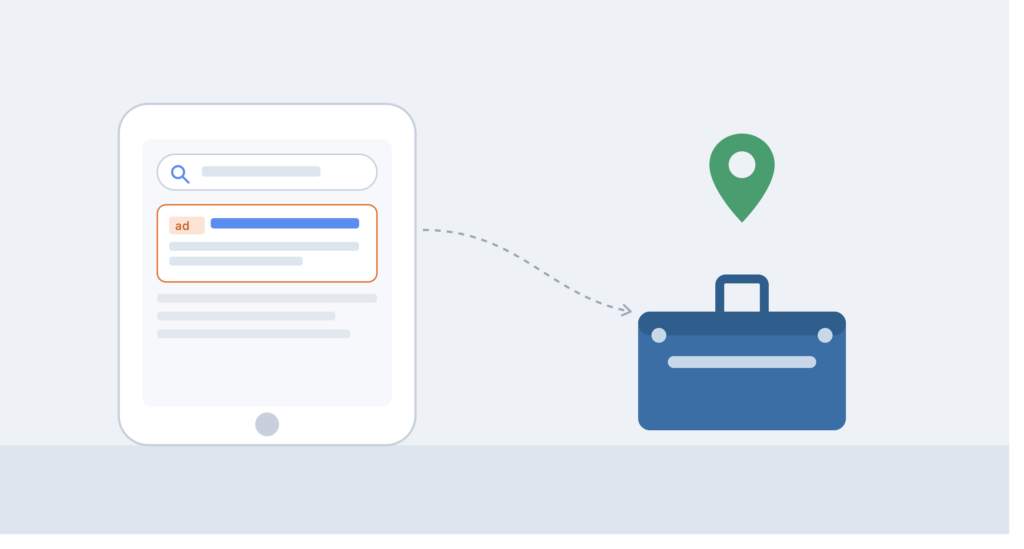
For the vast majority of Google Ads campaigns, yes, you need somewhere to send people when they click your ad. Google calls this your “ad destination,” and it’s usually a website or a landing page. Without one, Google has nowhere relevant to send a potential customer, and your Quality Score (which affects both your rankings and your cost per click) will suffer badly. That said, there are a couple of genuine workarounds worth knowing about, especially if you’re a local service business like a boiler repair company.Option 1: Use your Google Business Profile as your landing page
If you don’t have a website, the most realistic route is to set up a Google Business Profile (GBP) first. This is the free listing that shows your business on Google Maps and in local search results, and it opens up a few doors: Local Services Ads, a “pay per lead” ad format built specifically for trades like plumbers, electricians and boiler engineers. These ads sit right at the top of search results, above standard Search Ads, and use your Google Business Profile as the destination instead of a website. No landing page required. Performance Max with a Business Profile as the ad destination. Google will build a simple, Google-hosted page from your Business Profile information (opening hours, service area, reviews, phone number) and use that as where your ad clicks land. A free auto-generated “Business Profile Website”. Google can spin up a very basic one-page site pulled directly from your profile details. It’s not pretty and gives you almost no control over messaging or design, but it’s enough to get a standard Search Ads campaign off the ground while something better is built. The catch: none of this works without the Business Profile itself, and profile verification can take a few days. So if you don’t have a website and don’t have a Business Profile yet, this is genuinely step one, not a nice-to-have.Find Out How to Optimise Your Google Business Profile
Can you run Google Ads with neither a website nor a Business Profile?
Realistically, no, not in any way that would produce useful results for a local trade business. Standard Search Ads, Display Ads and Performance Max all need an ad destination of some kind, whether that’s a proper website, a landing page, or a Business Profile page. Even call-only ads, which just show a phone number, require Google to verify that number against a website first. There is one edge case: if you run a YouTube channel with over 10,000 views, you can monetise it via Google AdSense without a traditional website. For a boiler repair business, this obviously isn’t a practical starting point. The bottom line: a Google Business Profile is the minimum viable foundation for running ads without a website. Skipping it isn’t really an option if you want your ad spend to do anything useful.Why a proper website still wins, even once you’ve got a Business Profile
Getting ads live via a Business Profile is a way to start fast, not a long-term strategy. A dedicated website, even a simple one, makes a real difference to your results: Lower cost per click. A relevant, well-built landing page improves your Quality Score, and Google rewards that with cheaper clicks. More trust. Reviews, photos of past jobs, accreditations and clear pricing all help turn a click into an enquiry. A one-page Google-generated page can’t do this. Better lead capture. A proper contact form or booking widget converts far more visitors than a phone number sitting on a Maps listing. Real conversion tracking. With a website, you can install Google Ads conversion tracking and GA4, so you know exactly which keywords and ads are generating paying jobs, not just clicks. Without a website, that visibility disappears, and you’re optimising blind.
Our recommendation
If you’re weighing this up for your own business, here’s the order we’d suggest:- Set up (or claim) your Google Business Profile straight away. It’s free, it’s the foundation for local visibility generally, and it unlocks Local Services Ads and Performance Max as a stop-gap ad destination.
- Get a simple, purpose-built website live as soon as you can. It doesn’t need to be a huge project. A focused, five-page site covering your services, coverage area, reviews and a clear way to get in touch is enough to run proper Search Ads campaigns and start tracking real leads, not just clicks.
- Run Search Ads to the website, not a Business Profile page, once it’s live. This is where you’ll see the best cost per lead over time.
Should You Bid on Your Own Brand Name?
It’s one of those questions that comes up regularly in paid search conversations, and it’s completely understandable why. If you’re already ranking at the top end of page 1 organically, why would you pay for a click you’d likely get for free?
A fair question but in our experience, the answer is almost never as straightforward as it looks and most of the time the advice we give to our clients usually come down to context rather than convention. Here five areas of discussion taken from actual client projects and conversations – no AI slop here thank you very much 🙂

The “I Already Rank Number One” Argument
This is the most common objection we hear, and we get it. If your organic listing is sitting comfortably at the top of the results, paying for an ad above it can feel like buying something you already own.
But there are a couple of things worth considering. First, how confident are you that your competitors aren’t bidding on your name? In a recent audit for a new foot health and podiatry client, we found clear evidence of competitor brands running ads against their brand terms. They had strong organic rankings but without a brand campaign of their own, those competitors were showing up above them every time someone searched by name. In that situation, doing nothing isn’t a neutral choice.
Second, and this is something we found from a PPC campaign for a luxury fashion brand we worked with: the economics of brand keywords are often much more favourable than people expect. We initially questioned whether brand bidding made sense given how well they ranked organically, but the data changed our thinking. CPCs on brand terms were negligible, and the conversion rate on those clicks was up to three times higher than non-brand keywords. Once you see numbers like that, it’s not really a debate anymore. You can read more about our work with that client here.
When Brand Bidding Makes Particular Sense
Beyond the defensive case, there are situations where brand campaigns have a more active, strategic role to play.
One of the clearest examples is when a brand is investing across multiple channels simultaneously. We work with a proptech start-up, Skip the Deposit, who are building awareness through organic social content, direct mail, and sector-specific sponsorships. When prospects encounter the brand across those channels and then search for them, brand ads ensure that the final step – the click – is seamless, consistent, and converts. It’s the digital equivalent of joining the dots.
A similar dynamic played out for Luchos, an organic nutrition brand we worked with who were active at lifestyle and outdoor sport events. They were building real-world brand awareness, but needed their digital presence to capitalise on it. With a relatively tight budget, brand campaigns became a key part of how they converted that awareness into subscribers. Ads drove more than 80% of new subscriber acquisition – you can read the full story here.
The Budget Question
Brand keywords tend to be cheap to bid on (you have the highest relevance score for your own name), but cost can creep up if competitors are actively bidding against you. It’s worth keeping brand campaigns in their own budget line so you can monitor spend and CPC independently, rather than letting it get lost in the overall account.
If you’re working with a very limited budget and have strong organic coverage with no visible competitor activity, there’s a reasonable case for prioritising spend elsewhere. But we’d always recommend checking first as competitor brand bidding is more common than most business owners realise, and it’s not always obvious until you look.
A Few Practical Tips and Lessons on Brand Bidding;
- Keep brand campaigns separate from your other ad groups so the data stays clean. Monitor who’s bidding on your terms regularly. And if your brand name is trademarked, it’s worth familiarising yourself with Google’s trademark policy as it gives you some recourse if competitors are using your name in their ad copy directly.
- Dedicated landing pages for brand traffic can also be worth testing, particularly if you want to lead visitors to a specific message or offer rather than just your homepage.
- Brand bidding isn’t something every business needs, but it’s something every business should at least consider and make a deliberate decision about rather than defaulting to inaction. The scenario where it doesn’t make sense is narrower than people think: strong organic coverage, minimal competitor activity, and budget genuinely better deployed elsewhere.
- In most other situations, the combination of low CPCs, high-intent traffic, and the protection it offers against competitor bidding makes it a sensible part of the mix.
If you’re not sure whether it’s right for your account, we’re happy to take a look. A quick audit will usually tell you everything you need to know.
Microsoft Ads, ClickTech, and a Cup of Copilot: Making Q4 count
The Axonpoint team recently joined ClickTech and Microsoft for a deep dive into how Microsoft Advertising is evolving — and what brands can do to make the most of the high-stakes autumn/winter period.

While consumer brands head into peak shopping season, many B2B businesses experience the opposite: fewer inbound moments, longer buying cycles, and a greater need for precision. That’s why this session stood out. The day brought together Microsoft specialists, agency practitioners and data-driven marketers, each sharing what’s genuinely moving the needle inside the Microsoft Ads ecosystem.
Below are the themes that shaped the conversations — and the ones we’ll be carrying into Q4 planning.
Display is Having a Moment
One of the early discussions focused on Display. And if you haven’t revisited Microsoft’s offering recently, it’s worth a second look.
Matt Beswick (Quality Bearings Online) summed it up simply: Microsoft Display has levelled-up. His point wasn’t about shiny features, but about targeting. By tagging users at ad-group level — across job roles, industries, companies and more — advertisers can create precise, higher-value segments, particularly in B2B programmes.
The advice was to spend more time inside the audience data itself. Find the pockets of unexpected performance. Build around them. And don’t forget the quieter tools: Microsoft Clarity for behaviour insights, or templated reporting that speeds up the “what’s actually happening here?” analysis.
Smarter Account Management: It’s Not Just a Copy of Google
A recurring message from multiple speakers: importing Google Ads into Microsoft is fine as a starting point — but not as a strategy.
To unlock real performance, Microsoft needs a native approach. That means:
- Refreshing Google imports every quarter
- Reviewing CPA and ROAS targets (they behave differently)
- Checking UTMs for consistency
- Reassessing bidding strategies, especially when budgets are lean
PMAX also earned a fair amount of attention. Pairing Microsoft’s version with Copilot is already generating impressive conversion lifts for some advertisers.
The Microsoft Ecosystem Is Bigger Than You Think

One of the most interesting sessions was led by Niki Grant (Partner Support Lead), who walked us through the Microsoft Ads ecosystem. Spoiler: it’s huge.
We’re talking beyond Bing — into LinkedIn, Xbox Live, Edge, MSN, and even Microsoft 365. Plus, through search partners like DuckDuckGo, Ecosia, and Nextdoor, you’re reaching privacy-first audiences and niche communities you won’t find anywhere else.
With predictive targeting and signal-powered shopping, Microsoft is leaning into the idea of intent-driven discovery. In plain English: it’s learning what users want before they know it themselves.
Ready for Peak Season? Here’s Your Checklist
As Q4 kicks in, preparation is key. Microsoft shared a great holiday readiness checklist, and it’s one we’ll definitely be applying for clients:
✅ Review asset groups and creatives
✅ Use broader seasonal search themes
✅ Update ad extensions (and make them relevant!)
✅ Revisit bidding strategies for faster reactions
✅ Adjust budgets to match consumer demand
✅ Schedule ads logically — timing matters
✅ Make seasonality adjustments for traffic spikes
The key message? Don’t just crank up your spend and hope for the best. Everyone else is doing that. Instead, refine smarter.
Collaboration Over Isolation
One panel ended with a point that stuck with us: “Channel isolation kills insight.”

If you’re still treating Microsoft Ads as an add-on or afterthought, you’re missing half the picture. Microsoft Ads isn’t just a retargeting platform or a cheaper version of Google — it’s a growing, data-rich environment, especially effective for B2B and high-value audiences.
As Alice Yan (The Ingenuity) put it, the brands winning right now are the ones who track and report holistically — seeing how every touchpoint connects.
So What Next?
Between Copilot, PMAX, predictive data, and its unique reach across platforms like LinkedIn and Xbox, Microsoft Ads is quickly moving from “nice to have” to “essential.”
For us, the biggest lesson from the ClickTech x Microsoft event was that Microsoft’s ad ecosystem is maturing fast — and for marketers who give it proper attention, there’s real opportunity this season to capture audiences others are missing.
And yes, we’ll admit: we’re a bit excited to get stuck in so if you’d like to know how you can reach new audiences and steal a march on your competition, get in touch to find out about test campaign offers and incentives!
Google Ads Updates: EU Political Advertising Restrictions Coming September 2025
Google Ads Updates have been announced an important policy change that will impact advertisers across the European Union. Starting in September 2025, new rules around political content in Google Ads will come into effect to align with EU Regulation 2024/900.
What’s the Goggle Ads Updates?
From September, certain types of political advertising will no longer be allowed on Google platforms within the EU.
Ads that will be prohibited include:
- Campaigns created by, for, or on behalf of a political actor (unless the content is purely private or commercial).
- Any advertisement intended to influence elections, referendums, voting behavior, or legislative/regulatory outcomes at EU, national, regional, or local level.
Who counts as a “political actor” under EU law?
The regulation defines this broadly to include:
- Political parties and affiliated organizations
- Political alliances and European political parties
- Candidates for elected office at any level, as well as current officeholders
- Members of EU institutions and national/regional/local governments (with limited exceptions)
- Campaign groups established solely to influence elections or referendums
- Anyone acting on behalf of the above entities or promoting their political objectives
Google Ads featuring the following will also be restricted:
- Political parties, coalitions, officeholders, or candidates for the EU Parliament or elected national roles
- Referendum campaigns, groups, or calls to vote on sovereignty or other national/state-level referendums

What Will Still Be Allowed?
Some communications remain permitted if advertisers complete Google’s approval process:
- Official announcements from EU or Member State authorities about how to take part in elections or referendums (e.g., candidacy details, referendum questions, participation guidance).
- Public service communications issued on behalf of governments or EU bodies, provided the content is informational only and not designed to sway outcomes.
Self-Declaration Requirement
From mid-August 2025, advertisers will need to declare whether they intend to run political ads. If “yes” is selected, the new restrictions will automatically apply from September.
Transparency & Verification Changes
- The current EU Political Ads Transparency Report will be discontinued in September 2025.
- Past election ads will remain visible in the Ads Transparency Center, subject to Google’s data retention rules.
- Advertisers already verified for EU election ads will be moved into Google’s broader Advertiser Verification Program.

Enforcement
Violations of the new policy will not trigger immediate account suspension. Instead, advertisers will receive at least 7 days’ notice before any suspension is applied.
If you’re running Google Ads in the EU, it’s vital to review your campaigns ahead of September 2025 to ensure compliance. If you’d like help or further information about this, we’d offering free support until 31st October 2025. Simply enter your details below.
What to Do When Your Google Ads Account Is Fully Optimised
Facing a Plateau

You’ve done everything right: your Google Ads account is finely tuned, your campaigns are running at peak efficiency, and your return on ad spend (ROAS) is impressive. But now, you’re hitting a plateau. Growth has slowed, and despite all the optimisations, there’s little room left for improvement.
As a business owner or marketer, this might feel like a frustrating situation. You’re probably asking yourself, “What next? How do I continue to drive growth without compromising the efficiency of my already optimised Google Ads campaigns?”
The good news is that there are ways to break through this ceiling and continue your growth journey.
So What’s the Solution?

A NEW ADVERTISING PLATFORM!
When your Google Ads account is fully optimised, why not explore new platforms? One of the most effective and complementary platforms to consider is Microsoft Ads. Often overlooked, Microsoft Ads (AKA Bing Ads) provides a unique opportunity to capture additional market share, reach new audiences, and enhance your overall digital marketing strategy.

Why Microsoft Ads is a Great Next Step?
- Access to a Different Audience: Microsoft Ads has a significant user base that differs demographically from Google. For example, in the United Kingdom, Microsoft Advertising reaches an audience of 23 million users—34% of the total population—with 67% of desktop operating system market share belonging to Windows. This audience is more likely to be older, highly educated, and financially secure, making them valuable prospects for many businesses that sell higher cost products/services.
- Lower Competition = Lower CPC: With fewer advertisers on Microsoft Ads compared to Google Ads, there’s often less competition. This can result in lower cost-per-clicks (CPCs), making your ad spend stretch more, while still driving quality traffic to your site.
- Seamless Integration: If you’re already familiar with Google Ads, you’ll find Microsoft Ads’ platform intuitive and user-friendly. It offers straightforward import options for your Google Ads campaigns, ensuring a smooth transition with minimal learning curve.
- Unique Features and Tools: Microsoft Ads offers exclusive features like LinkedIn Profile Targeting (allowing you to target users based on their LinkedIn profiles). This is particularly beneficial for B2B businesses aiming to connect with decision-makers in specific industries.
- Netflix – Your New Channel:While Google Ads allows you to access YouTube for video advertising, Microsoft Ads offers the unique opportunity to display your Video Ads on Netflix. As Netflix restructures its subscription options, the most affordable tier will include unskippable ads—shown before, during, and after series or films. With no minimum ad spend required, this is an ideal option for businesses looking to reach targeted audiences. However, as this feature is currently in Beta Testing, it is available exclusively to Partner Advertisers. To learn more, skip to the end of this article or contact us at info@axonpoint.co.uk.
Who Benefits the Most?
Microsoft Ads can be especially beneficial for:
- Businesses targeting the UK market: With 605 million monthly searches and 29 million monthly PC searchers, Microsoft Ads offers significant reach in the UK. On top of this, Bing’s search volume increased by over 3% in the first half of 2023, indicating a growing user base. Given that online shopping is constantly growing in the UK—home to the largest e-commerce market in Europe—Microsoft Ads is a valuable tool for reaching engaged, high-spending consumers.
- Businesses targeting specific demographics: In the UK, 61% of Microsoft Ads users are under 45 years old, and 34% have high household incomes. Additionally, 33% hold a university degree, making this platform ideal for brands seeking to connect with educated, affluent audiences.
- B2B companies: Microsoft Ads’ LinkedIn targeting allows B2B companies to reach professionals and decision-makers. This is a powerful tool for businesses looking to build relationships with key stakeholders in industries such as technology, telecommunications, and financial services—industries that are top clicked verticals in the UK.
- E-commerce brands: The British e-commerce market is the largest in Europe, and with Microsoft Ads, you can tap into this thriving market. Microsoft’s audience has 20% more online spending power than the average internet searcher, making it an attractive option for online retailers.
Breaking Through the Ceiling
If you’re feeling stuck with a fully optimised Google Ads account, remember that it’s not the end of the road. By expanding to new platforms like Microsoft Ads, you can continue to grow your business, reach new audiences, and enhance your overall digital marketing efforts. With our exclusive vouchers and new advertising channels, there’s no better time to make the leap.
Ready to explore the potential of Microsoft Ads? Contact us at info@axonpoint.co.uk to start your next phase of growth!


