Can You Run Google Ads Without a Website? A Straight Answer for Trade & Service Businesses
The short answer
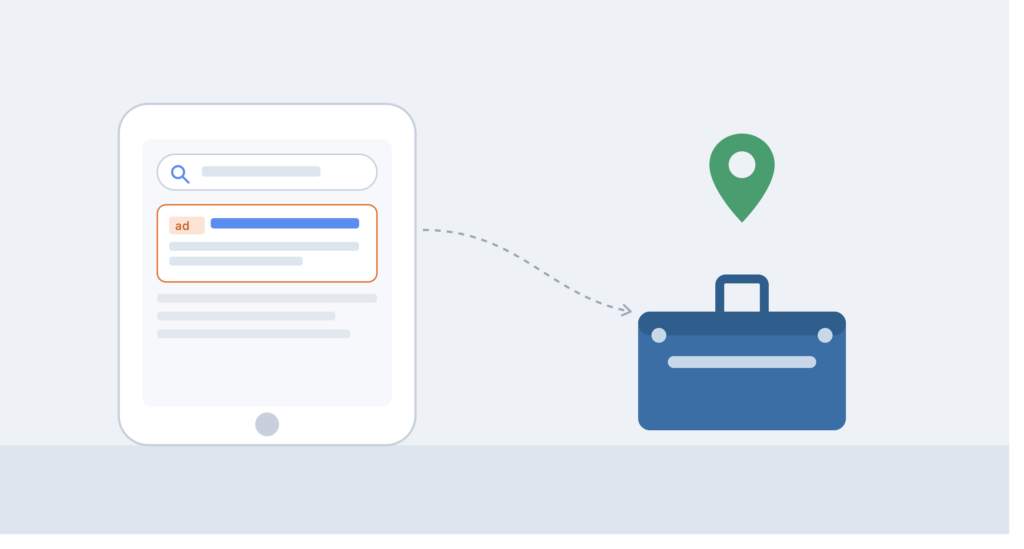
For the vast majority of Google Ads campaigns, yes, you need somewhere to send people when they click your ad. Google calls this your “ad destination,” and it’s usually a website or a landing page. Without one, Google has nowhere relevant to send a potential customer, and your Quality Score (which affects both your rankings and your cost per click) will suffer badly. That said, there are a couple of genuine workarounds worth knowing about, especially if you’re a local service business like a boiler repair company.Option 1: Use your Google Business Profile as your landing page
If you don’t have a website, the most realistic route is to set up a Google Business Profile (GBP) first. This is the free listing that shows your business on Google Maps and in local search results, and it opens up a few doors: Local Services Ads, a “pay per lead” ad format built specifically for trades like plumbers, electricians and boiler engineers. These ads sit right at the top of search results, above standard Search Ads, and use your Google Business Profile as the destination instead of a website. No landing page required. Performance Max with a Business Profile as the ad destination. Google will build a simple, Google-hosted page from your Business Profile information (opening hours, service area, reviews, phone number) and use that as where your ad clicks land. A free auto-generated “Business Profile Website”. Google can spin up a very basic one-page site pulled directly from your profile details. It’s not pretty and gives you almost no control over messaging or design, but it’s enough to get a standard Search Ads campaign off the ground while something better is built. The catch: none of this works without the Business Profile itself, and profile verification can take a few days. So if you don’t have a website and don’t have a Business Profile yet, this is genuinely step one, not a nice-to-have.Find Out How to Optimise Your Google Business Profile
Can you run Google Ads with neither a website nor a Business Profile?
Realistically, no, not in any way that would produce useful results for a local trade business. Standard Search Ads, Display Ads and Performance Max all need an ad destination of some kind, whether that’s a proper website, a landing page, or a Business Profile page. Even call-only ads, which just show a phone number, require Google to verify that number against a website first. There is one edge case: if you run a YouTube channel with over 10,000 views, you can monetise it via Google AdSense without a traditional website. For a boiler repair business, this obviously isn’t a practical starting point. The bottom line: a Google Business Profile is the minimum viable foundation for running ads without a website. Skipping it isn’t really an option if you want your ad spend to do anything useful.Why a proper website still wins, even once you’ve got a Business Profile
Getting ads live via a Business Profile is a way to start fast, not a long-term strategy. A dedicated website, even a simple one, makes a real difference to your results: Lower cost per click. A relevant, well-built landing page improves your Quality Score, and Google rewards that with cheaper clicks. More trust. Reviews, photos of past jobs, accreditations and clear pricing all help turn a click into an enquiry. A one-page Google-generated page can’t do this. Better lead capture. A proper contact form or booking widget converts far more visitors than a phone number sitting on a Maps listing. Real conversion tracking. With a website, you can install Google Ads conversion tracking and GA4, so you know exactly which keywords and ads are generating paying jobs, not just clicks. Without a website, that visibility disappears, and you’re optimising blind.
Our recommendation
If you’re weighing this up for your own business, here’s the order we’d suggest:- Set up (or claim) your Google Business Profile straight away. It’s free, it’s the foundation for local visibility generally, and it unlocks Local Services Ads and Performance Max as a stop-gap ad destination.
- Get a simple, purpose-built website live as soon as you can. It doesn’t need to be a huge project. A focused, five-page site covering your services, coverage area, reviews and a clear way to get in touch is enough to run proper Search Ads campaigns and start tracking real leads, not just clicks.
- Run Search Ads to the website, not a Business Profile page, once it’s live. This is where you’ll see the best cost per lead over time.
Google Ads Updates: EU Political Advertising Restrictions Coming September 2025
Google Ads Updates have been announced an important policy change that will impact advertisers across the European Union. Starting in September 2025, new rules around political content in Google Ads will come into effect to align with EU Regulation 2024/900.

What’s the Goggle Ads Updates?
From September, certain types of political advertising will no longer be allowed on Google platforms within the EU.
Ads that will be prohibited include:
- Campaigns created by, for, or on behalf of a political actor (unless the content is purely private or commercial).
- Any advertisement intended to influence elections, referendums, voting behavior, or legislative/regulatory outcomes at EU, national, regional, or local level.
Who counts as a “political actor” under EU law?
The regulation defines this broadly to include:
- Political parties and affiliated organizations
- Political alliances and European political parties
- Candidates for elected office at any level, as well as current officeholders
- Members of EU institutions and national/regional/local governments (with limited exceptions)
- Campaign groups established solely to influence elections or referendums
- Anyone acting on behalf of the above entities or promoting their political objectives
Google Ads featuring the following will also be restricted:
- Political parties, coalitions, officeholders, or candidates for the EU Parliament or elected national roles
- Referendum campaigns, groups, or calls to vote on sovereignty or other national/state-level referendums

What Will Still Be Allowed?
Some communications remain permitted if advertisers complete Google’s approval process:
- Official announcements from EU or Member State authorities about how to take part in elections or referendums (e.g., candidacy details, referendum questions, participation guidance).
- Public service communications issued on behalf of governments or EU bodies, provided the content is informational only and not designed to sway outcomes.
Self-Declaration Requirement
From mid-August 2025, advertisers will need to declare whether they intend to run political ads. If “yes” is selected, the new restrictions will automatically apply from September.
Transparency & Verification Changes
- The current EU Political Ads Transparency Report will be discontinued in September 2025.
- Past election ads will remain visible in the Ads Transparency Center, subject to Google’s data retention rules.
- Advertisers already verified for EU election ads will be moved into Google’s broader Advertiser Verification Program.

Enforcement
Violations of the new policy will not trigger immediate account suspension. Instead, advertisers will receive at least 7 days’ notice before any suspension is applied.
If you’re running Google Ads in the EU, it’s vital to review your campaigns ahead of September 2025 to ensure compliance. If you’d like help or further information about this, we’d offering free support until 31st October 2025. Simply enter your details below.
What to Do When Your Google Ads Account Is Fully Optimised
Facing a Plateau

You’ve done everything right: your Google Ads account is finely tuned, your campaigns are running at peak efficiency, and your return on ad spend (ROAS) is impressive. But now, you’re hitting a plateau. Growth has slowed, and despite all the optimisations, there’s little room left for improvement.
As a business owner or marketer, this might feel like a frustrating situation. You’re probably asking yourself, “What next? How do I continue to drive growth without compromising the efficiency of my already optimised Google Ads campaigns?”
The good news is that there are ways to break through this ceiling and continue your growth journey.
So What’s the Solution?

A NEW ADVERTISING PLATFORM!
When your Google Ads account is fully optimised, why not explore new platforms? One of the most effective and complementary platforms to consider is Microsoft Ads. Often overlooked, Microsoft Ads (AKA Bing Ads) provides a unique opportunity to capture additional market share, reach new audiences, and enhance your overall digital marketing strategy.

Why Microsoft Ads is a Great Next Step?
- Access to a Different Audience: Microsoft Ads has a significant user base that differs demographically from Google. For example, in the United Kingdom, Microsoft Advertising reaches an audience of 23 million users—34% of the total population—with 67% of desktop operating system market share belonging to Windows. This audience is more likely to be older, highly educated, and financially secure, making them valuable prospects for many businesses that sell higher cost products/services.
- Lower Competition = Lower CPC: With fewer advertisers on Microsoft Ads compared to Google Ads, there’s often less competition. This can result in lower cost-per-clicks (CPCs), making your ad spend stretch more, while still driving quality traffic to your site.
- Seamless Integration: If you’re already familiar with Google Ads, you’ll find Microsoft Ads’ platform intuitive and user-friendly. It offers straightforward import options for your Google Ads campaigns, ensuring a smooth transition with minimal learning curve.
- Unique Features and Tools: Microsoft Ads offers exclusive features like LinkedIn Profile Targeting (allowing you to target users based on their LinkedIn profiles). This is particularly beneficial for B2B businesses aiming to connect with decision-makers in specific industries.
- Netflix – Your New Channel:While Google Ads allows you to access YouTube for video advertising, Microsoft Ads offers the unique opportunity to display your Video Ads on Netflix. As Netflix restructures its subscription options, the most affordable tier will include unskippable ads—shown before, during, and after series or films. With no minimum ad spend required, this is an ideal option for businesses looking to reach targeted audiences. However, as this feature is currently in Beta Testing, it is available exclusively to Partner Advertisers. To learn more, skip to the end of this article or contact us at info@axonpoint.co.uk.
Who Benefits the Most?
Microsoft Ads can be especially beneficial for:
- Businesses targeting the UK market: With 605 million monthly searches and 29 million monthly PC searchers, Microsoft Ads offers significant reach in the UK. On top of this, Bing’s search volume increased by over 3% in the first half of 2023, indicating a growing user base. Given that online shopping is constantly growing in the UK—home to the largest e-commerce market in Europe—Microsoft Ads is a valuable tool for reaching engaged, high-spending consumers.
- Businesses targeting specific demographics: In the UK, 61% of Microsoft Ads users are under 45 years old, and 34% have high household incomes. Additionally, 33% hold a university degree, making this platform ideal for brands seeking to connect with educated, affluent audiences.
- B2B companies: Microsoft Ads’ LinkedIn targeting allows B2B companies to reach professionals and decision-makers. This is a powerful tool for businesses looking to build relationships with key stakeholders in industries such as technology, telecommunications, and financial services—industries that are top clicked verticals in the UK.
- E-commerce brands: The British e-commerce market is the largest in Europe, and with Microsoft Ads, you can tap into this thriving market. Microsoft’s audience has 20% more online spending power than the average internet searcher, making it an attractive option for online retailers.
Breaking Through the Ceiling
If you’re feeling stuck with a fully optimised Google Ads account, remember that it’s not the end of the road. By expanding to new platforms like Microsoft Ads, you can continue to grow your business, reach new audiences, and enhance your overall digital marketing efforts. With our exclusive vouchers and new advertising channels, there’s no better time to make the leap.
Ready to explore the potential of Microsoft Ads? Contact us at info@axonpoint.co.uk to start your next phase of growth!


